
A move can put an unfinished goal back on the kitchen table: earning a GED, getting comfortable with math again, improving English or preparing for a different kind of work. Around Rainsville, you do not have to treat all of those goals as a decision to enroll in a college degree. Northeast Alabama Community College has several different routes, and choosing the right one makes the first step much less confusing.
The practical question is what you need at the end: stronger foundation skills, a specific training course or a test result an employer has requested. Those lead to different offices, schedules and costs. Here is how to sort them out before paying for a class or arranging time away from work.
Start with the result you need
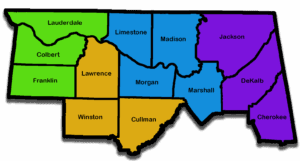
NACC describes its campus as near Rainsville on the Jackson–DeKalb county line. Its adult education program serves DeKalb, Jackson and Marshall counties. The college handbook describes no-charge adult education instruction for people age 17 or older who are not enrolled in K–12. That is a useful starting point for an eligibility conversation, not a promise of admission to every program. Read NACC’s program overview.
| Your immediate goal | Start here | Keep this distinction in mind |
|---|---|---|
| GED preparation, English or academic brush-up | Adult Education | Foundation learning, with an individual starting point |
| A particular occupational skill or short course | Skills Training / Community Education | Noncredit training; use the specific course’s terms and cost |
| A WorkKeys result requested for a job | WorkKeys testing | An assessment appointment, not a training class |
For example, someone who already has a diploma but feels rusty in math should begin by describing that learning goal. Someone holding an employer’s WorkKeys instruction should bring that instruction to the testing process. A person comparing a short occupational course with a degree program needs to settle the credit question before enrolling. The names can sound similar while the outcomes are quite different.
Adult Education: a starting point, not a leap into a degree
NACC Adult Education lists free GED preparation, English instruction and college brush-up, with day, evening and online options across its service area. New students complete orientation and a placement exam to establish an individual study plan. Its Rainsville-area campus listing is Beck Building, room 213, Monday–Thursday, 8:30 a.m.–6 p.m. The Adult Education page gives locations and contacts; those posted hours do not establish a walk-in orientation or an available seat.
Use the NACC Adult Education interest form to identify your goal, or call 256-638-2957 or 256-228-0021. If the form offers no registration appointment, use those program contacts rather than assuming that every location or subject is unavailable. Contact the program to confirm your next available orientation.
Be specific about the obstacle you want to remove. “I need to rebuild my math before my next course” gives the program a clearer starting point than “I think I need to go back to school.” If English instruction is your goal, identify that separately instead of assuming every listed classroom offers every subject. The value of the initial conversation is finding the route and format that fit your learning need.
Short workforce courses: separate the skill from college credit
NACC says its Skills Training courses do not carry college credit and that the offerings are open to adults regardless of previous educational attainment. Some prepare students for industry certifications. Its Business and Industry Training and Community Education page lists individual offerings and directs questions to workforce@nacc.edu.
That makes the actual course description more useful than the broad label “workforce training.” Compare the skill taught, the credential offered, the meeting dates and the full quoted cost. Keep an exam fee, required materials and the course fee as separate budget questions when the listing does not say they are included. The free Adult Education offer should not be carried over to a different course just because both are associated with NACC.
If you want credit toward a degree, take that requirement to the college before choosing a noncredit class. If you want a particular skill for your present work, a shorter course may be the relevant comparison. Neither route promises a job, a wage increase or an employer’s acceptance of a credential; the useful match is between the stated outcome and your actual purpose.
WorkKeys: arrive for the right assessment
NACC’s WorkKeys page separates education, industry/manufacturing and law-enforcement testing tracks. The education route lists Applied Math, Workplace Documents and Business Writing; the industry/manufacturing and APOST routes list Applied Math, Workplace Documents and Graphic Literacy. Use the requirements supplied for your position when selecting a registration route.
Testing is in the Workforce Skills Training Center’s WT 161 Proctoring Suite. NACC requires registration and payment before testing, a working email address for account creation and valid photo identification on test day. The page describes three tests taking approximately two to three hours. That estimate is useful for planning time away from work, but it is not an exact finish-time guarantee.
Keep the testing confirmation separate from a class schedule. It should tell you what you registered for and when to arrive. If an employer’s instruction and the college’s choices do not appear to match, resolve that mismatch before paying. Completing a test is also different from satisfying a particular employer’s score requirement; this guide does not assign a passing score or determine your eligibility for a position.
Put the campus visit into your real week
The college’s published main address is 138 AL Hwy 35, Rainsville, Alabama 35986. That map search identifies the campus, not a particular classroom door. Use NACC’s interactive campus map with your appointment instructions: Beck 213 and WT 161 are different destinations.
A workable learning plan needs a realistic place in your week. Start with the actual session or appointment you select, then allow for the trip from home, finding the building and getting back to the next commitment. An online option still needs protected time and a suitable place to study. Avoid choosing a home on an assumed class schedule or judging a route from the distance between two town names.
If you are exploring DeKalb County before a move, try combining a campus orientation visit with an ordinary errand rather than a packed sightseeing day. For a different part of your future routine, the Fort Payne outdoor-living guide explains the distinctions among nearby park destinations. It is a separate planning resource, not evidence of a commute time from Rainsville.
Program information checked October 27, 2026. Schedules, course offerings and registration availability can change; the linked college pages are the sources for the next enrollment step. Featured image: an original AI-generated learning illustration, not a photograph of NACC, its staff, students or campus.
Final Thoughts: Choose one useful next step
Returning to learning does not have to begin with a large commitment. It can begin with a clearly named goal and the right first contact. For a Rainsville-area resident, the important distinction is between learning foundational skills, taking a specific noncredit course and completing an employer-requested assessment. Once that choice is clear, the schedule and budget become much easier to organize.
Want Personalized Real Estate Help?
If you are moving to Rainsville, DeKalb County or another Northern Alabama community, I can help you think through how your housing priorities fit the routines you want to build. Whether you are buying or preparing to sell, contact me to talk about your next move.
Browse homes in Fort Payne and the surrounding area. This is a broader area search, not a Rainsville-only filter or a promise of convenient travel to campus. We can narrow the home search around the locations and routines that matter to you.
Sharing is Caring:
Author