Jessica Hassan
The lawn that came with your North Alabama home may need a different routine from the one you left behind. Before repeating an old fertilizer program or buying lime because the yard looks tired, find out what is growing and what the soil actually needs.
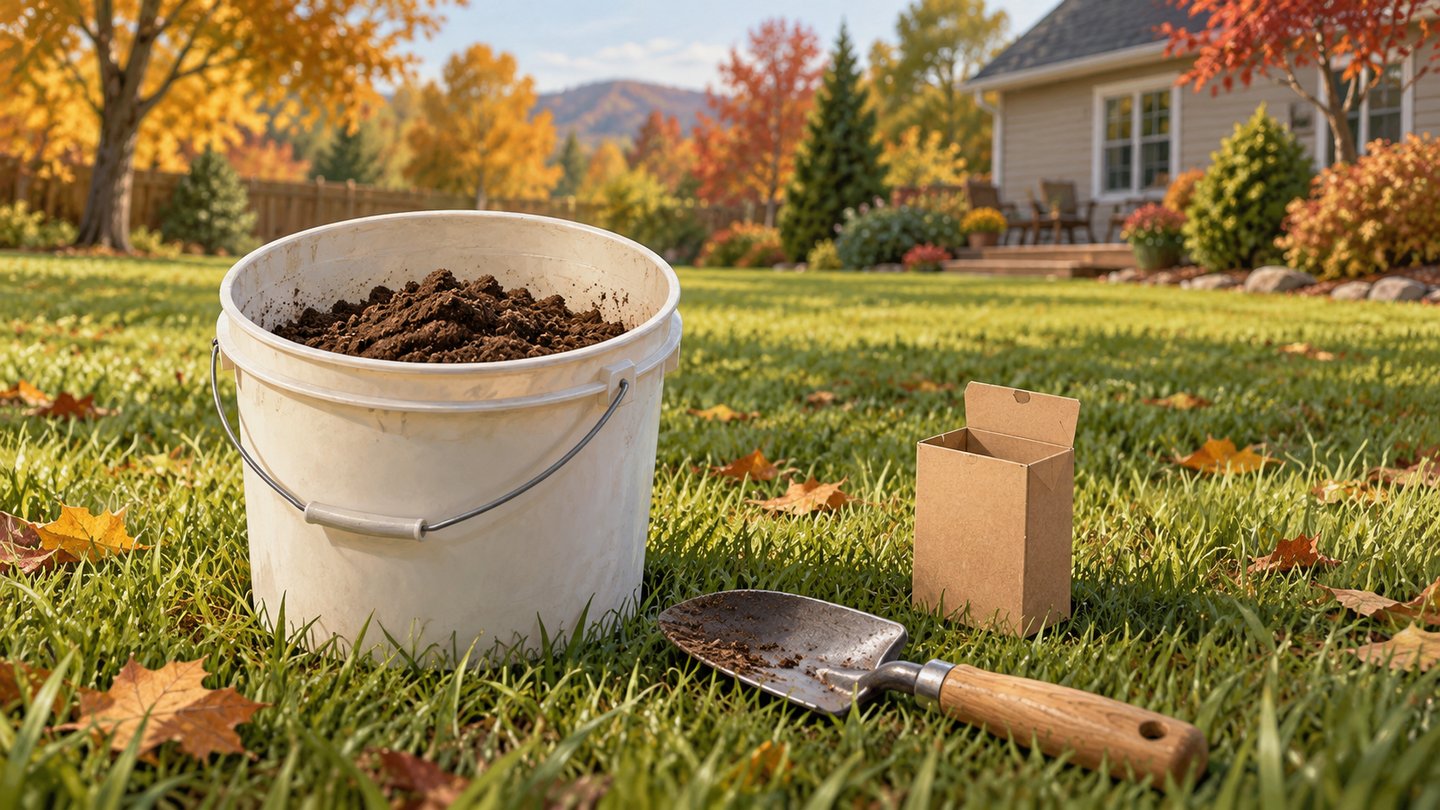
This guide is for caring for an existing lawn: divide it into useful sampling areas, send a representative sample, and turn the report into a grass-specific plan. The featured image is an AI-generated illustration of a fictional yard and sampling supplies.
Give each sample a place and a grass name
Start with a simple sketch of your yard. Mark the front lawn, back lawn and any distinct problem patch. Write down the grass species for each area; an old sod invoice or the previous owner’s maintenance records may help. If the name is uncertain, resolve it with your county Extension office before requesting recommendations.
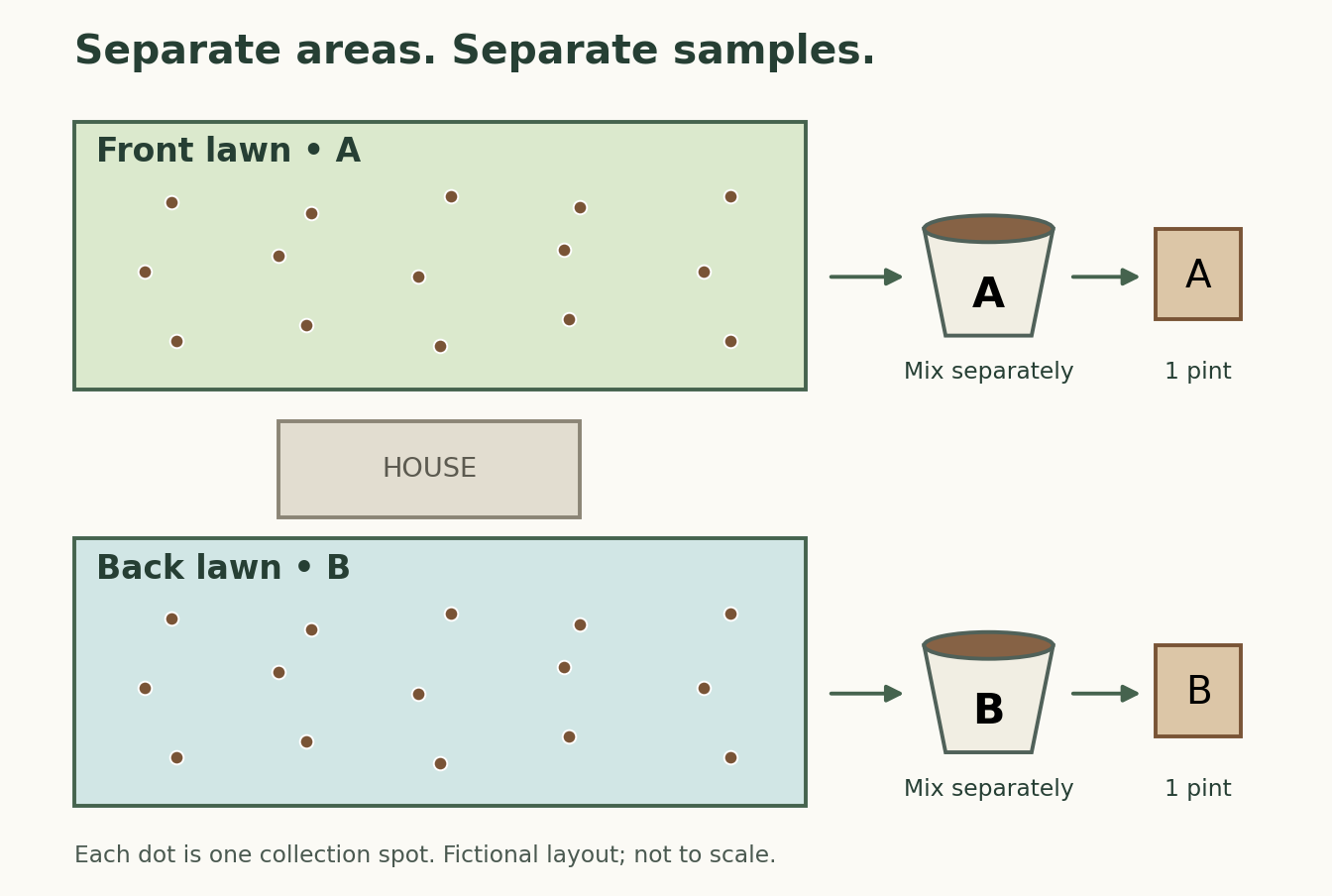
Auburn’s soil-sample form calls for separate samples where soil appearance, plant growth or past treatment differs. A struggling patch should have its own sample rather than disappear into a mixture from the healthy lawn. Give each area a durable name, such as “front bermuda” or “back fescue,” and put that same name on your sketch, container and form.
Imagine a healthy front lawn and a thin back lawn that received different care. Mixing both together would leave you with one report and two different questions. Keeping them separate lets you match each recommendation to the place it represents. This is a hypothetical example, not a diagnosis of the thin grass.
Collect many small portions, then mix within one area
For established turf, Alabama Extension’s home sampling guide specifies 15–20 evenly sized cores or slices, each 2–3 inches deep, collected across the sampling area. Put them in a clean bucket, mix thoroughly, and take about one pint of that mixture for the sample box. If the sample is wet, Auburn’s linked form instructs you to send it in a plastic bag. Repeat with a separate, clean collection for the next area.
Use the soil beneath the surface litter, not a scoop of leaves. Auburn’s form says to clear organic residue and recently applied fertilizer from the collection spots. If the lawn was recently treated and you cannot get a representative sample, discuss the timing with the lab rather than guessing a waiting period. Record what was applied and when.
A trowel or sampling probe can collect the small portions. Keep the sampling depth consistent; a deep garden sample and a shallow established-lawn sample represent different soil layers. Extension’s instructions treat newly cultivated areas separately, so do not use this lawn depth for every planting bed.
Before reaching into the turf, look for hazards. If you find a suspected ant mound, leave that spot undisturbed and use my North Alabama fire-ant identification and yard-care guide for that separate decision.
Use the current submission instructions
The Auburn Soil, Forage & Water Testing Laboratory page links its routine analysis form and customer login. As checked October 30, 2026, the linked form lists $10 per sample, and the lab describes a 3–7-day turnaround after receipt. Shipping time is additional; this is a planning estimate, not a promised delivery date.
The lab also announces a forthcoming customer-portal change that will require accounts and advance sample entry after rollout. Its notice does not give a rollout date. Open that current page before packing, follow the submission process then displayed, and use the current form’s payment instructions. This avoids relying on an older Extension article that still says one to two days.
Include the county, sample names, grass species, contact details and observed problem. Keep a copy of what you submitted with your yard sketch. A routine test measures pH and nutrients; disease, insect and nematode investigations use different diagnostic submissions.
Read the crop and comments before the colorful bars
Extension’s report-reading guide explains that nutrient ratings depend on both the soil group and the intended crop. Start by checking that the sample name and grass match your yard. Then read the recommendation and crop-specific comments together. A number under “results” is a measurement; it is not automatically the amount of product to spread.
| Report item | What it tells you | Homeowner action |
|---|---|---|
| Soil pH | Acidity or alkalinity | Use the grass-specific lime recommendation, not a universal target of 7. |
| Nutrient rating | Interpretation for the crop and soil group | Very high means no additional amount of that nutrient is needed; a longer bar is not a goal. |
| Lime recommendation | An amendment amount, with its own units | Read the lawn-area conversion and comments before selecting product or quantity. |
| Fertilizer recommendation and comments | Nutrient needs and application guidance | Separate nutrient weight from bag weight, and seasonal totals from individual applications. |
Centipedegrass shows why the grass name matters. Alabama Extension’s centipedegrass guide says it tolerates pH 5.0–6.0 better than other turfgrasses and also performs well at 6.0–6.5. High pH can contribute to yellowing, and this grass generally needs less fertilizer or lime than other turfgrasses. Those facts do not establish that your lawn is centipedegrass or that it needs acidifying. They explain why “all lawns need lime” is a poor shopping rule.
If the report names the wrong grass, get the recommendation corrected before applying anything. Bring the actual report, sample-area sketch and treatment history to Extension; “what does this recommendation mean for my back lawn?” is a question it can work with.
Keep nutrient amounts, product amounts and timing separate
According to Alabama Extension’s lawn-maintenance guide, established healthy lawns need phosphorus fertilizer only when the soil test recommends it. Nitrogen is different: a routine soil test cannot reliably establish the lawn’s nitrogen requirement. The grass species and its growing season guide that program. A test taken in October does not mean the resulting plan should be applied in October.
Warm-season grass fertilized with nitrogen too late in fall can be more vulnerable to winter injury. Tall fescue follows a different seasonal schedule. Use the species-specific maintenance guidance alongside your soil report, rather than transferring a cool-season routine to bermudagrass or zoysiagrass.
The three fertilizer-bag numbers are percentages by weight of nitrogen, phosphate and potash. Here is a calculation example only: ten pounds of a 20-0-10 product contains two pounds of nitrogen, zero phosphate and one pound of potash. It does not contain ten pounds of nitrogen, and those numbers do not establish how much your lawn needs.
Measure the lawn area being treated, excluding the house, driveway and beds. Auburn’s fertilizer and lime calculator instructions explain how to work with the report’s units and the actual area. A product matched to one nutrient can supply too much or too little of another; review all three outputs rather than choosing a bag solely by its first number.
Allow time for lime, and keep other problems in view
Alabama Extension’s fall lawn guidance identifies fall as a useful time to test and explains that lime can take several months to adjust soil pH. Where the report calls for lime, plan the application method and timing from that recommendation and product instructions. Repeatedly adding more because the lawn has not changed color is not a useful test of whether it is working.
Keep the report and any applications in your household records. Extension’s lawn-maintenance guide recommends retesting every two to three years; ask about an earlier follow-up when you are investigating a particular problem or correcting an uncertain result.
A fertility report cannot show where roof water travels. If the thin patch stays wet after surrounding ground dries, use my roof-runoff and downspout walkthrough to organize those observations. Soil chemistry and the route water takes deserve separate attention; more fertilizer will not explain an unknown drain outlet.
Conclusion: Keep the sample, report and lawn area connected
The useful outcome is a record you can act on: named lawn areas, known grass, representative samples and recommendations attached to the right places. Decide whether a product is needed before deciding which bag to buy. That gives you a manageable starting point for the yard you have, without importing a fertilizer routine from another climate.
Want Personalized Real Estate Help?
Settling into a Northern Alabama home comes with practical questions about its outdoor space. I can help with the buying, selling or relocation side of that transition. Contact me to talk about your plans; your Extension office and soil laboratory are the right resources for lawn identification and interpreting a specific test.
Sharing is Caring:
Author

Sources and review notes
Sources checked October 30, 2026. Sampling guidance was reviewed in October 2021; report guidance in 2022; the general maintenance guide is dated May 2023. The current lab page and linked form govern submission details, which may change with the announced portal transition.