Jessica Hassan
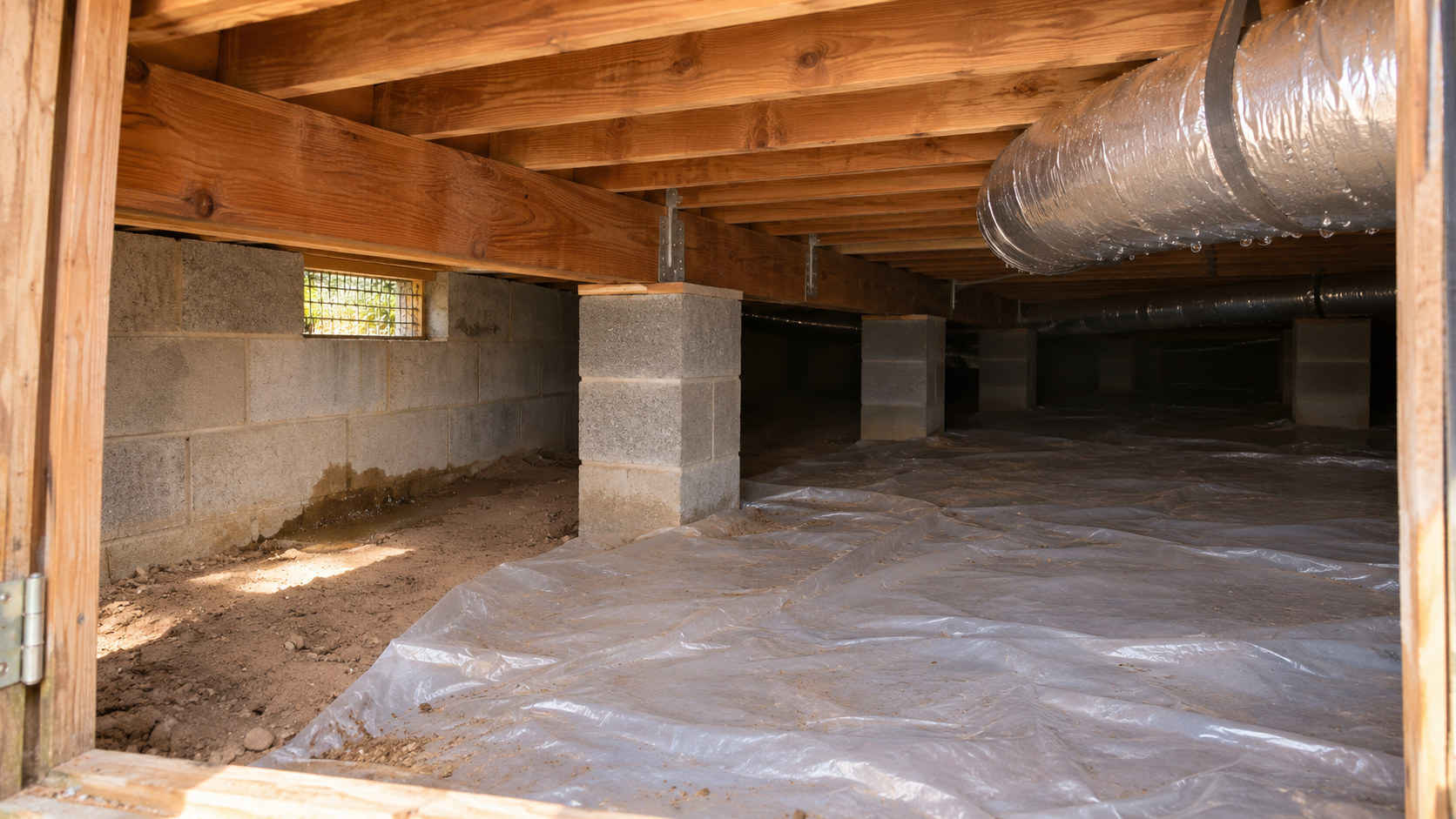
A damp crawlspace can mean several different things to a North Alabama homebuyer. Water may be entering after rain, evaporating from uncovered soil, leaking from plumbing, or condensing on a cool duct. Those paths can coexist. A repair quote that names only the damp spot, without identifying its source, leaves the buyer with the central question unanswered.
Use the inspection period to request evidence of the pathway and a cause-specific scope from a qualified professional. This guide helps you organize that conversation; it cannot diagnose a particular house from a listing photo or prescribe one crawlspace system for every foundation.
First, separate three moisture pathways
| What you see or document | Possible pathway to investigate | Question for the inspector or specialist |
|---|---|---|
| Puddles, water marks, or dampness concentrated near a wall after rain | Bulk water entering from outside, a drain, or a plumbing leak | Where does the liquid enter, and what evidence ties it to rain, a pipe, or another source? |
| Exposed earth, a loose or damaged ground sheet, persistent humid air | Moisture rising from the soil as vapor or liquid | Is the ground cover continuous and appropriately detailed for this foundation, and what else is feeding the humidity? |
| Droplets on a cool duct, pipe, or joist while the surrounding ground looks different | Humid air condensing on a colder surface | What are the temperature and humidity conditions, and is the duct, pipe, or air system part of the cause? |
These are clues, not diagnoses. The U.S. Department of Energy’s crawlspace guidance explains that soil moisture may enter as liquid or vapor and later condense on floor joists. The EPA’s mold course separately lists groundwater, bare earth, drainage, leaking pipes, humidity and condensation as possible contributors. Ask which pathway the evidence supports at this house, rather than treating the table as a do-it-yourself test.
Match the repair scope to the cause
For visible liquid water, ask the inspector to locate the entry point and document the conditions that reveal it, including whether the finding follows rain or an active plumbing fixture. A contractor’s proposal should state how the exterior water or leak will be addressed and how the crawlspace will be dried. A ground sheet alone should not be presented as a cure for an unresolved bulk-water path. DOE includes site grading and perimeter drainage among measures for bulk-water control.
For exposed soil or a compromised ground cover, ask a crawlspace specialist to evaluate a continuous ground moisture barrier as part of a complete plan. DOE’s guidance describes a sealed polyethylene capillary break for crawlspace floors, whether the space is vented or unvented. Details at walls, piers and penetrations matter. The installer should explain the proposed materials, drainage, ventilation or conditioning approach and any inspection-access requirements for this particular home. Avoid buying a generic “encapsulation” package before those conditions are documented.
For moisture concentrated on a cool duct or pipe, ask an HVAC or plumbing professional to distinguish condensation from leakage and to review humidity, insulation and equipment operation. EPA explains that warm, humid air can condense on a cold surface. A proposal that only wipes or paints the surface does not show how the moisture source will be controlled.
Request a record you can evaluate before agreeing
Ask the home inspector for dated photos and written locations, and ask whether the inspection could see the full crawlspace. If access was limited or conditions were dry on inspection day, document that limit rather than treating a clean-looking photograph as proof that water never enters. Have the appropriate licensed or qualified specialist evaluate concerning structural wood, electrical equipment, HVAC components, plumbing or substantial water damage. Do not enter an unsafe or contaminated space yourself.
| Evidence to request | Why it changes the decision |
|---|---|
| Dated photos or a sketch showing the wet areas, wall, floor, joists, ducts and ground cover | Shows whether the finding is localized, repeated, or in several pathways. |
| Written source hypothesis with what was actually tested or observed | Separates a supported cause from a guess based on odor or staining alone. |
| Itemized scope: source correction, damaged-material assessment, drying, and follow-up check | Lets you see whether the proposal addresses both the water source and its effects. |
| Access limits, warranty terms and who will verify the result | Makes uncertainty and responsibility visible before you negotiate. |
If mold or decay is suspected, the EPA’s homeowner guidance says cleaning without fixing the water problem is likely to allow mold to return. It advises professional help for substantial water damage, larger mold areas, contaminated water and other special circumstances. The relevant professional must assess the actual materials and scope; a real-estate article cannot label a stain, declare a structure sound, or give a health diagnosis.
Keep related buyer questions separate
Water observed at the foundation may lead you to check roof runoff and yard drainage, but those are only part of the investigation. My North Alabama runoff guide explains how to trace gutters, downspouts and surface drainage. It does not identify the moisture source inside a crawlspace. Radon testing and termite inspection paperwork answer different purchase questions; a moisture proposal should not be taken as either test.
Final Thoughts
Before accepting a crawlspace repair plan, ask what is wet, when it is wet, how the source was established, and how the proposed work will correct that source and verify drying. Compare the written findings with the seller’s disclosures and your contract deadlines, and take property-specific repair, negotiation and safety questions to the appropriate inspector, contractor and real-estate or legal professionals.
EPA and U.S. Department of Energy pages checked November 7, 2026. This article is general homebuyer information, not an inspection, remediation design, health opinion or guarantee about a specific property. The featured image is AI-generated and does not depict a real listing.
Want Personalized Real Estate Help?
Buying in North Alabama? I can help you keep property-condition questions and inspection deadlines organized while the right specialists evaluate the house. Tell me about your home search.
If Huntsville is one market you are considering, browse Huntsville-area homes. The listing search is a starting point; it does not establish a home’s crawlspace condition or cover all of North Alabama.
Sharing is Caring:
Author