Jessica Hassan
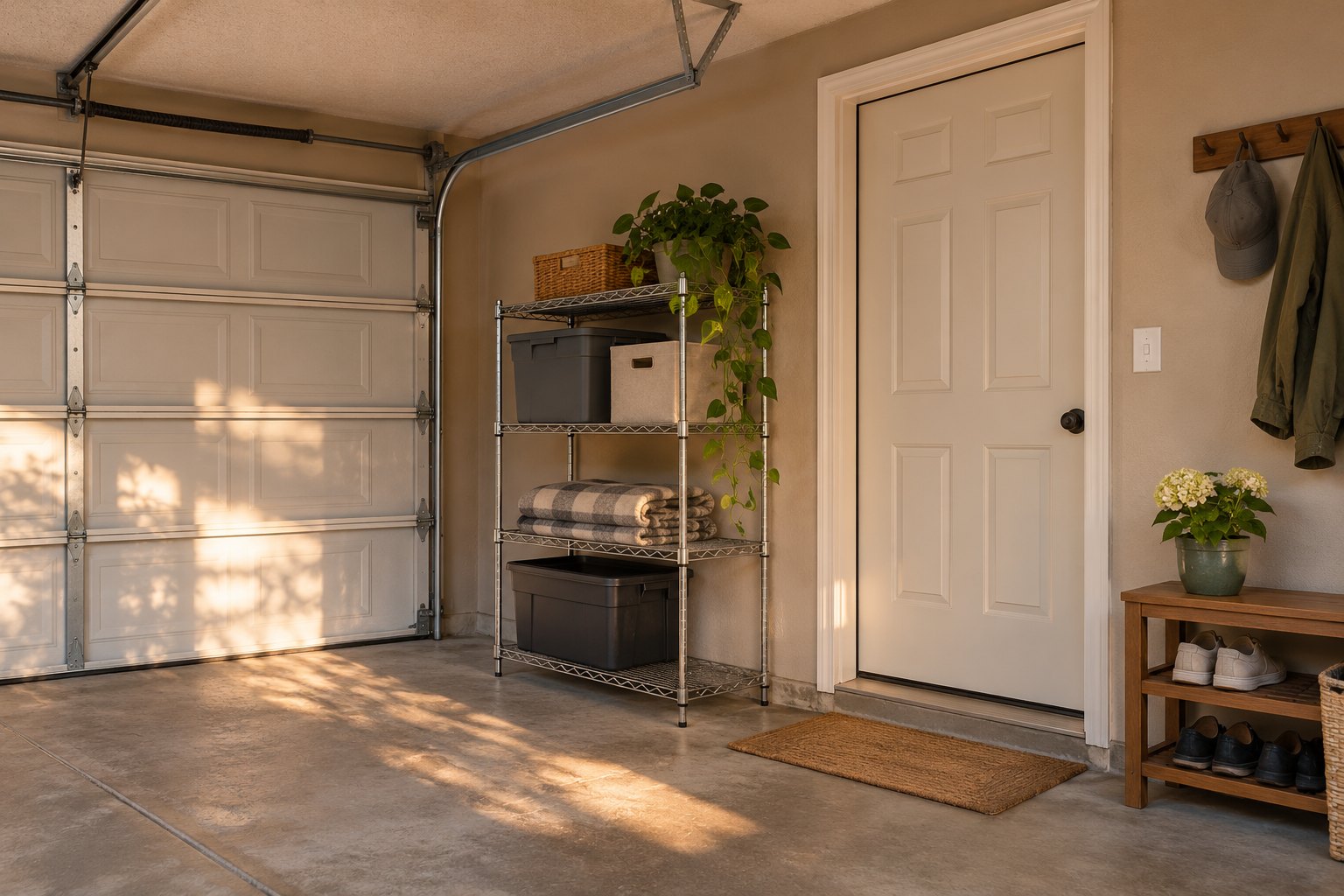
An attached garage can be a welcome shortcut on a rainy North Alabama day. For a buyer, it also creates a less visible question: what separates the garage air from the rooms where people live? Look at the door, the shared walls or ceiling, and any heating or cooling equipment that connects the spaces. Those observations give your inspector a specific question to answer; they do not diagnose the house from a showing.
The issue is broader than carbon monoxide alone. The U.S. Environmental Protection Agency identifies automobile exhaust from attached garages as a CO source, and its renovation guidance also discusses pollutants from vehicle emissions and stored products. The useful purchase decision is whether the home has a well-evaluated garage-to-living-space boundary, especially before a remodel changes it. See the EPA carbon-monoxide source guide and EPA single-family renovation guidance.
Follow three interfaces, not just the garage door
A quick walk-through can locate questions for a qualified inspector without pretending that a closed door proves the whole wall is tight. Keep the observation and the professional assessment separate:
| What you can observe | Why it belongs in the inspection question | What to request |
|---|---|---|
| House-entry door: does it close fully, and are visible weatherstripping and threshold details intact? | The door is one part of the garage-to-house boundary. | Ask the inspector to document the door condition and identify any gap or repair that needs a qualified follow-up. |
| Shared wall or ceiling: note visible openings, unfinished work, or a room above the garage. | Air paths may also occur at penetrations and framing connections beyond the door. | Ask which areas were visible, which were concealed, and whether a specialist should assess leakage before renovation. |
| Heating and cooling: note any ducts, air handler, supply or return grille visible in the garage. | Equipment serving occupied rooms can create an additional air-path question. | Ask an HVAC professional to identify what the equipment serves and evaluate any garage-to-house connections. |
These are inspection prompts, not a do-it-yourself sealing plan or a code verdict. EPA’s renovation protocol names doors, wall and ceiling penetrations, floor connections, ducts and air handlers as places to assess. The older Department of Energy air-sealing guide likewise describes the pass-through door, shared walls and, where a room is above the garage, floor-joist paths. The DOE guide includes an older code discussion; use its building-science observations here, not that discussion as a statement of current Alabama requirements.
Ask what the heating and cooling system actually serves
A vent or cabinet in the garage raises a different question from a loose door sweep. EPA recommends evaluating existing air-handling equipment and ductwork that serves occupied rooms and is located in a garage. It cautions that changing that equipment can affect HVAC performance, so the scope belongs with an HVAC professional. A buyer can photograph the equipment label and visible route, then ask the inspector to state what they could verify and what remains concealed. Do not assume every duct you can see serves the house, or that a sealed-looking cabinet settles the issue. Read EPA’s equipment and ductwork assessment guidance.
If a renovation is planned, discuss the garage boundary before selecting finishes or moving equipment. EPA’s protocol calls for identifying air leaks at the interface and evaluating doors, penetrations and ducts. A qualified contractor can decide what testing and repair are appropriate for that exact assembly; this article does not specify sealants, ventilation equipment or a fire-separation detail for an unseen property.
Keep the alarm plan and the air-path plan separate
A carbon monoxide alarm belongs in the household plan, but a quiet alarm is not a test of the garage boundary. EPA’s CO prevention factsheet says CO is odorless and colorless and warns that a vehicle must never run inside a garage, even with the garage door open. Its alarm guidance covers placement and maintenance; it does not turn an alarm into proof that a wall, door or duct is sound.
If a CO alarm sounds or symptoms suggest exposure, leave for fresh air and seek emergency help rather than investigate indoors. For the separate device inventory and replacement question, use my older-home smoke and CO alarm planning guide. If you are also planning backup power, my portable-generator placement guide explains why a garage, even with its overhead door open, is never the operating spot. Neither article substitutes for inspecting the attached-garage interface.
Turn a showing observation into a written follow-up
Before you decide that a repair quote resolves the issue, ask for a short record: the door and visible shared surfaces inspected, the location and use of any HVAC equipment, areas the inspector could not access, any observed gap or odor, and the recommended specialist or test. If a seller has renovation or HVAC records, compare them with the current layout. An odor can be a useful clue to investigate, but its absence does not prove there is no air path. EPA includes occupant odor complaints in its garage assessment protocol; it also calls for locating actual leaks. See the EPA assessment protocol.
For a North Alabama purchase, this gives you a manageable next step: carry the specific finding into the inspection and any repair discussion. Do not choose a sealing product, waive an inspection concern, or rely on a generic “garage is ventilated” statement in place of an evaluation of the boundary that exists at the property.
Conclusion: make the boundary a separate decision
The house-entry door is the easiest part of an attached garage to notice. The shared wall or ceiling and any HVAC connection deserve their own line on the inspection record. A buyer who separates visible clues from hidden conditions can ask for the right specialist assessment before agreeing to a renovation or a repair scope.
Want Personalized Real Estate Help?
If you are buying or relocating in North Alabama, I can help you organize property-specific questions and keep the inspection findings in view as you compare homes. I will not treat a photo, a quiet alarm or a general article as a safety certification. Contact me to talk through your home search and the records you want to request.
Sharing is Caring:
Author