Jessica Hassan
A portable generator can be useful during a power outage, but buying one does not establish that you can use it appropriately at a particular home. Before choosing a model, work through three separate questions: where it can operate outdoors, how it will connect to the equipment you need, and which loads it can actually support.
For North Alabama homeowners and people moving into a different type of property, this is a practical home-planning exercise. A detached house with open land and a tightly spaced home may offer very different placement options. The generator label alone cannot answer that question, and a garage with its door open is not an alternative operating location.
Start with the outdoor space, not the wattage
The Consumer Product Safety Commission’s May 2026 guidance says to operate portable generators outdoors at least 20 feet from homes and buildings, with exhaust directed away from windows, doors and other openings. Never operate one in a home, garage, basement, crawlspace, shed or another enclosed space. Opening doors or windows does not make enclosed operation appropriate.
Walk the property in daylight before an outage. Identify buildings and openings around the proposed location, including neighboring buildings, rather than measuring only from your own back door. Then compare the location with the generator manufacturer’s instructions. The 20-foot minimum is not a guarantee that every location beyond that distance is suitable.
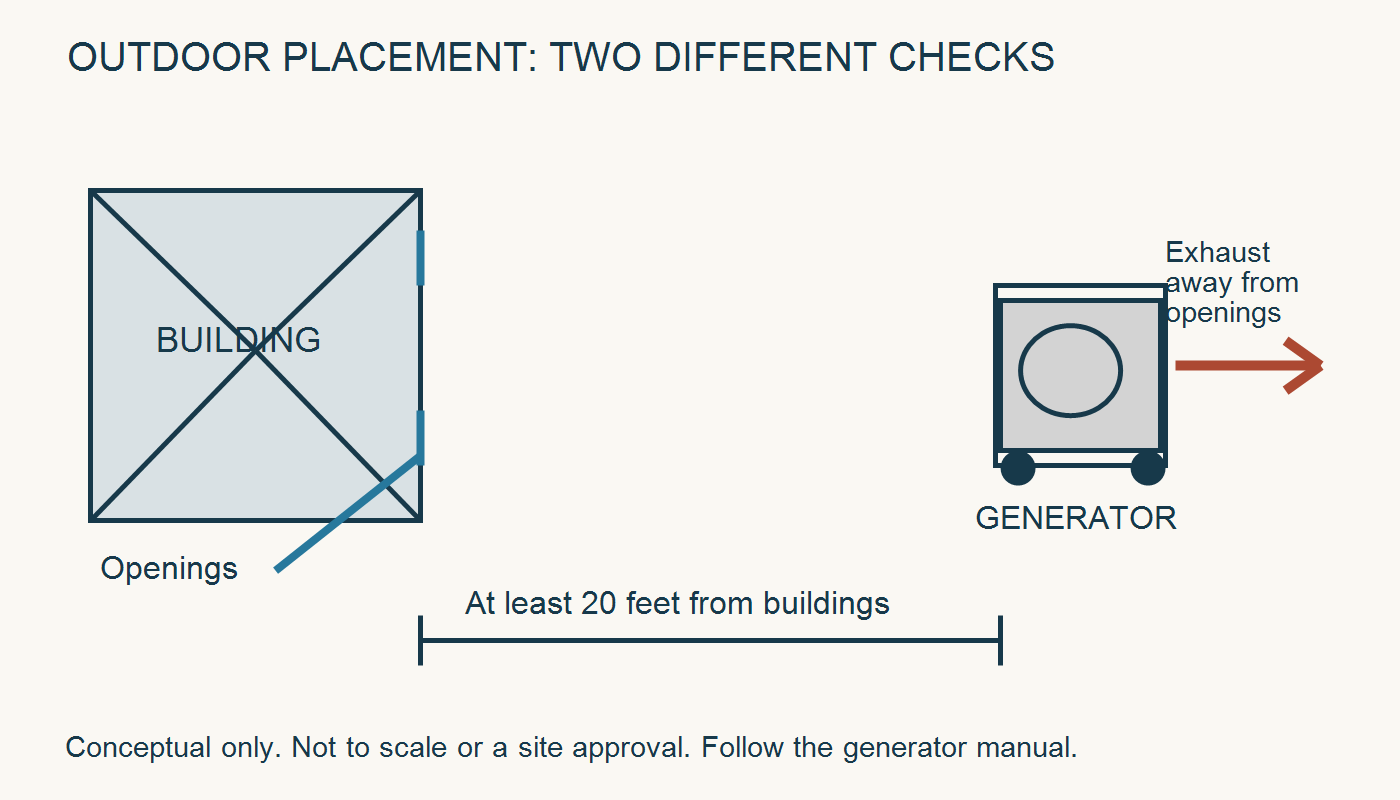
The diagram separates two ideas that are easy to collapse into one: placing the machine away from a building and directing its exhaust away from openings. It is not a map of your yard. It omits neighboring structures, wind, terrain and equipment-specific requirements, so it cannot approve an installation. If your available outdoor space cannot meet the guidance and instructions, do not improvise an indoor or partly enclosed operating spot.
Wet-weather operation needs a plan too. CPSC directs users to the manufacturer’s instructions to reduce electric-shock risk. Work out the permitted weather arrangement for the actual model before you need it; this article does not recommend a homemade enclosure or canopy. Moving a running generator into a garage to escape rain is not a solution.
Decide what “connected to the house” means
There is a major difference between supplying an appliance as the equipment instructions allow and supplying the home’s wiring. The American Red Cross generator guide says a permanent connection to house wiring requires an electrician to install an appropriate transfer switch in accordance with applicable codes. Never plug a generator into a wall outlet to feed the house. That practice, called backfeeding, can endanger utility workers, neighbors and people in the home.
Huntsville Utilities recommends a licensed electrician to determine generator size and proper installation and configuration. For a home served by another provider, ask that provider about its applicable requirements as well. An existing exterior inlet or a seller’s statement that the house is “generator ready” is a reason to obtain documentation and qualified inspection, not permission to connect equipment.
For a permitted appliance-and-cord arrangement, Red Cross guidance calls for a heavy-duty outdoor-rated cord with a rating sufficient for the connected loads, intact insulation and all required plug prongs. Have the actual route, equipment requirements and cord suitability resolved before an outage. Do not choose a smaller cord simply because it is long enough, and do not use this overview as wiring instructions.
Make an essential-load list from the equipment you own
Start with the jobs you need to keep running, then record the actual equipment information. Red Cross advises using appliance and tool labels when adding up power requirements and allowing for greater starting demand from some equipment. Do not assume a generator’s headline rating means it can run every appliance at once, or that a neighbor’s setup will support yours.
| Planning question | What to collect | What it resolves |
|---|---|---|
| Which equipment is essential? | Actual model, label and manufacturer instructions for each selected item | A specific list, rather than “the whole house” |
| What happens when it starts? | Running and starting requirements where applicable | Whether simultaneous demand fits the proposed equipment |
| How will it be supplied? | Electrician’s connection plan or permitted appliance connection requirements | Whether the electrical arrangement is appropriate |
| Where will it operate? | Outdoor-space observations and the generator manual | Whether there is a usable location before purchase |
For example, “keep food cold and provide a few lights” is a more useful starting conversation than “run everything.” It still needs the refrigerator’s actual starting requirements and the lighting load; no generic wattage example can certify that combination. Bring the list to the qualified professional helping select or install the system. If an electrically powered medical device is involved, make a separate continuity plan with its provider rather than assuming this generator plan is sufficient.
Plan the pauses as carefully as the running time
An outage plan should explain what happens when the generator must stop. Red Cross says to turn it off and let it cool before refueling, use the recommended fuel and appropriate approved containers, and consider local storage rules. Do not invent a fixed cooling time; follow the equipment instructions. Arrange the household’s essential needs around those interruptions rather than treating a portable generator as uninterrupted power.
CO protection remains necessary even when planning outdoor use. My older-home smoke and CO alarm planning guide covers the separate alarm inventory, placement and replacement questions. It does not replace generator siting or connection requirements. If a CO alarm sounds, CPSC says to get outside immediately and call 911; do not stay inside to investigate the generator.
Conclusion: a usable plan comes before a purchase
A useful portable-generator plan joins three things: suitable outdoor space, an appropriate connection and a realistic essential-load list. If one is unresolved, more advertised wattage does not close the gap. Working through the property and equipment details ahead of an outage gives you something concrete to discuss with an electrician and a clearer understanding of the home’s limitations.
Want Personalized Real Estate Help?
When you buy, sell or relocate in North Alabama, I can help you organize property questions and identify which ones need documentation or a qualified specialist. If a home is described as generator ready, include the installed equipment and available records in that conversation. Contact me to discuss your real estate plans.
Sharing is Caring:
Author

Sources and review notes
Safety guidance reviewed October 31, 2026. This is a homeowner planning overview, not electrical installation advice or approval of a particular property. Use current manufacturer instructions and qualified local guidance for the actual equipment and site.