Jessica Hassan
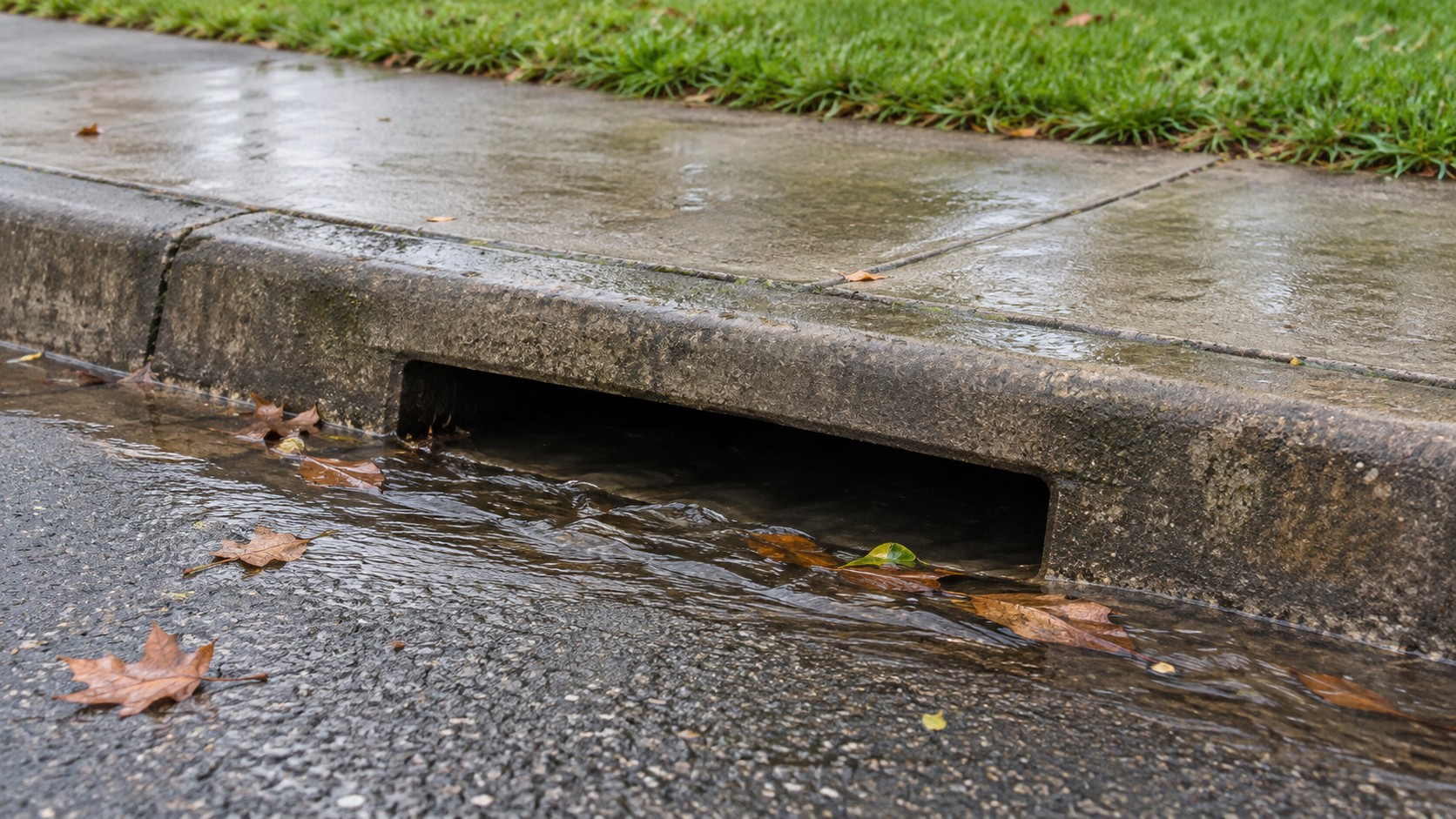
AI-generated generic drainage scene; not a photograph of a Huntsville location or reported incident.
A ditch holds water after rain. A new lot uphill is being cleared. Or a curb inlet beside a home looks blocked. In Huntsville, those observations can lead to different city actions. The useful first step is to separate a proposed land-disturbance project from a problem you can already see, then identify the exact location. The City’s ditches and drainage guidance covers both routes; it does not promise that every ditch beside a house is city-owned or that every grading job needs the same permit.
First, establish which jurisdiction and location you mean
A Huntsville mailing address alone is not a city-limits determination. The City’s GIS hub links city-boundary maps and “My Huntsville Services” for address-specific city information. Use those tools as a starting point, then ask the relevant city office to confirm a boundary or responsibility that affects the work. Note the location of the water problem itself, which may differ from your front-door address: for example, the inlet at the street, the ditch behind a fence, or a construction site uphill.
Do not assume that a visible concrete channel is public property. The City has explained that ditch ownership and maintenance differ among city-owned facilities, private property and easements. Its ditch-responsibility explanation describes the City’s concern with keeping water moving while ordinary mowing and minor upkeep may remain with the owner. A later City explanation likewise says the answer depends on the particular ditch. A service request can establish who should inspect a specific condition; it is not a ruling on your property line.
Match the concern to the next action
| What you are dealing with | Start here | Why that route fits |
|---|---|---|
| You plan to clear, fill, grade or change drainage as part of new work | Ask Huntsville Engineering about the applicable plan review and permit path before land disturbance | Engineering handles grading permits and drainage review for new development. The City says a grading, building or subdivision-construction permit must precede land disturbance unless the Storm Water Management Manual provides an exemption. Do not decide an exemption from a neighbor’s project. |
| Runoff, mud or erosion appears after a new house, street, subdivision or commercial project begins | Submit the observed problem through Huntsville Connect and identify the nearby project | The City lists drainage from new development among non-emergency issues residents can report. Engineering can address the development connection; reporting an effect is separate from obtaining a permit for your own work. |
| An existing ditch is eroding or overgrown, an inlet is clogged, a grate is broken, or water stands over a pipe | Report the exact condition through Huntsville Connect | These conditions appear on the City’s non-emergency drainage list. A report begins inspection and routing; it does not guarantee a city repair or routine landscaping on private land. |
| Water is creating an immediate threat to life or public safety, such as severe roadway flooding, water entering a building, a washed-out road or a rescue need | Call 911 | The City places current life-threatening and public-safety flooding in its emergency category. The app is for non-emergency requests. |
This table is a routing aid, not a permit or ownership decision. The City’s Engineering page identifies subdivision and grading permitting as a department function. Its drainage page says Engineering reviews runoff effects from new construction and issues grading permits for land disturbance unless exempt. It also lists both existing-system issues and new-development runoff in Huntsville Connect’s reporting categories. An owner planning work may therefore have a permit question while a neighbor has a separate reportable observation about that same work.
Make a non-emergency report useful to the person who receives it
Huntsville Connect asks you to choose a service category, place a marker or address at the problem location, attach a photo if possible, describe the condition, and submit the request. The City’s instructions say a request can be tracked. A short description can distinguish “standing water in a low yard after rain” from “street inlet filled with debris” or “mud arriving after clearing on the adjacent tract.” If a photo is safe to take from ordinary access, show both the feature and enough context to locate it. Record when you saw the water and whether it followed a particular storm or nearby construction; avoid entering a flooded roadway, culvert or worksite to get a better image.
If the concern is a private roof-to-yard route rather than a ditch or street system, our roof-runoff walk-through helps trace what happens after water leaves a downspout. It does not settle a city drainage complaint or replace professional diagnosis. If a newly built fence appears to block flow, the City lists that as a drainage-report example; our Huntsville fence-planning guide covers the separate boundary, approval and utility-locate decisions before changing your own fence.
What a report or permit question does not establish
Huntsville’s drainage page says Engineering works on improvements to existing facilities and reviews new development’s stormwater design, while Public Works handles some major rainfall problems after the event. That division does not tell you who owns a particular ditch, who must mow it, whether a planned yard project is exempt, or whether a nearby development caused damage. Those answers depend on the location, records and technical review. If a property transaction or project turns on the answer, get the city’s address-specific response and, where appropriate, advice from a qualified surveyor, engineer or contractor before treating a general map or neighbor’s experience as a parcel decision.
Conclusion
For a Huntsville drainage concern, identify the jurisdiction and the exact place water is misbehaving. If you plan to disturb land, ask Engineering about the applicable review before work starts. If you observe a non-emergency condition, use Huntsville Connect with a clear location and description, even when nearby new construction may be involved. Use 911 for an immediate life-safety emergency. Keep the city’s response with the property records; it is more useful to a future buyer or contractor than an assumption about who owns the ditch.
Want Personalized Real Estate Help?
If you are comparing Huntsville-area homes and want to understand how a drainage question affects your next step, contact me. I can help you organize the property questions while the right city office or qualified professional answers the technical ones. You can also explore Huntsville-area homes; a listing does not establish city jurisdiction, drainage ownership or permit status for a specific parcel.
Sharing is Caring:
Author