Jessica Hassan
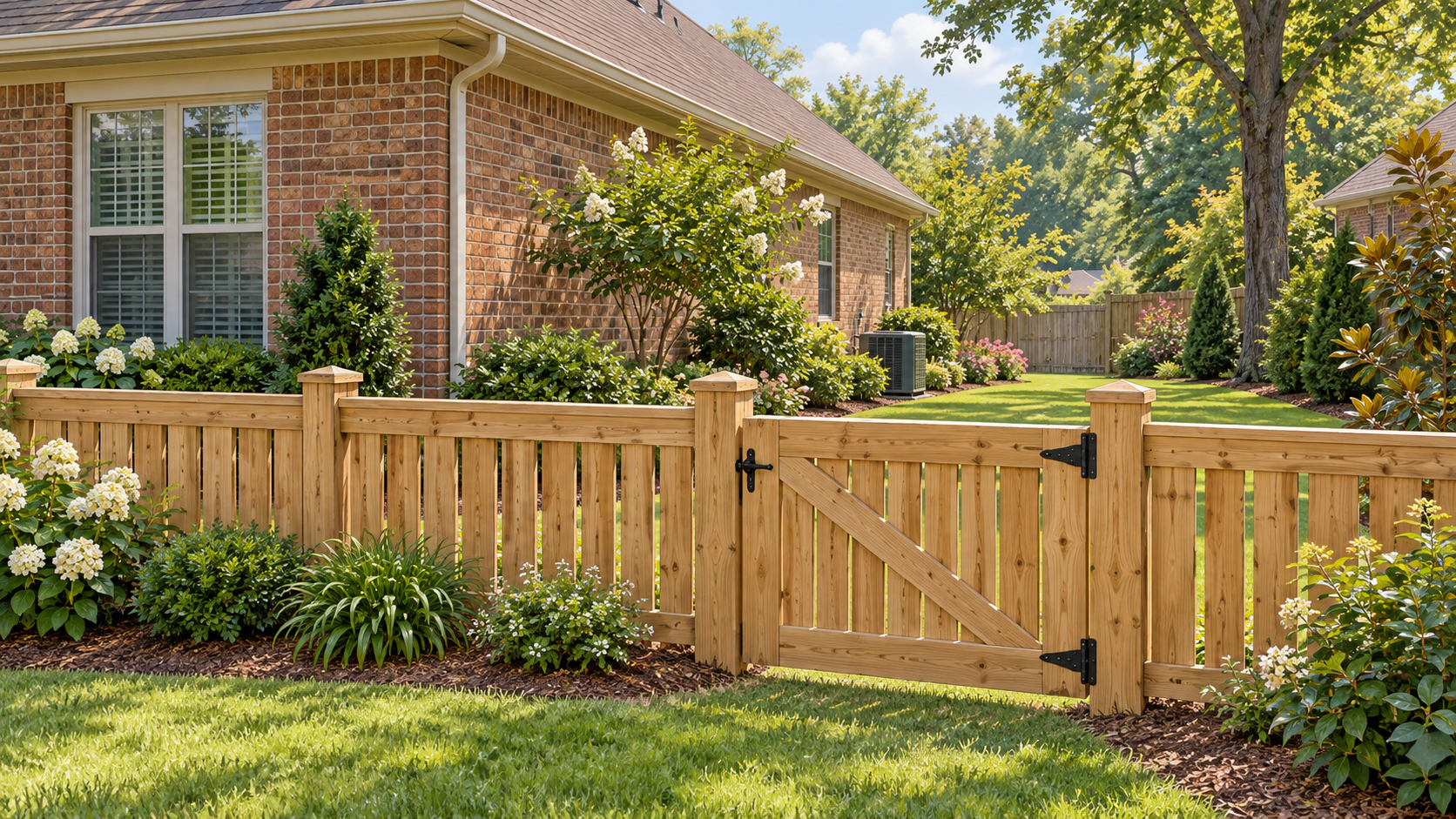
A fenced yard can be part of the reason a Huntsville home appeals to you: room for a dog, a more private patio or a defined garden. Before turning that idea into a material order, separate three questions: where the fence may go, which approvals apply, and what lies below the proposed post holes. A reassuring answer to one does not settle the others.
The useful goal is a fence plan that a surveyor, reviewer and installer can discuss without guessing which line or design you mean. Start with the three-record comparison, then work through the digging arrangements before setting an installation date.
Does Huntsville require a fence permit?
The City’s inspections FAQ says fences do not require a permit, while a fence in a Huntsville historic district needs preservation-commission approval. That is a specific municipal answer, not a statement that every fence design or location is acceptable. It also does not establish the rule for a property outside Huntsville city jurisdiction.
Start with the actual parcel, not the mailing city. The City’s Property Detail viewer accepts an address or parcel number and includes historic, parcel and zoning information. Use it to identify the property and frame a question; do not measure a fence offset from a screen image and call that a surveyed boundary.
Keep three different records separate
| Record | Question it helps answer | What it does not establish |
|---|---|---|
| Survey and property documents | Where is the boundary, and what recorded constraints need professional interpretation? | Approval of the fence design or underground-utility clearance. |
| Applicable written project approvals | Has the proposed design and placement received the review this property needs? | A newly established boundary or permission to dig through utilities. |
| Current utility locate request and responses | What underground facilities have operators identified in the work area? | Property ownership, fence-design approval or the depth of a utility. |
Keep these together, but label their purposes. An installer should not have to infer your intended fence line from a utility flag, and a contractor estimate should not be treated as the missing approval.
Establish the line before pricing a finished layout
The Alabama licensing board hosts consumer guidance on land surveying that specifically identifies fences as a situation in which a professional survey is useful. It explains that survey work combines field measurement with research into earlier documents and plats. The source is dated 2018; it is general professional guidance, not a new Huntsville survey mandate or a quoted price.
Gather the survey and property records you already have. Tell an Alabama-licensed land surveyor that you are planning a fence and identify which sides of the yard are involved. Ask what existing information can be relied on, what fieldwork is needed, and how the result will communicate the line to the installer. Do not move a marker, use a neighbor’s recollection as a measurement, or assume an existing fence occupies the legal boundary.
For easements, recorded restrictions or association documents, identify the actual document and affected portion of the proposed layout. Ask a qualified professional to interpret unresolved rights or restrictions, and obtain any applicable association response before ordering. This guide does not decide whether a particular easement permits a fence or whether an association approval is required for your property.
Verify the professional rather than relying on a profile or an image of a seal. A current Alabama consumer alert dated October 28, 2026 warns about false professional credentials on freelance sites and recommends checking identity and Alabama licensing. Match the person you engage to the licensing record and contact their established business directly if anything is inconsistent.
For a historic-district fence, describe the actual change
Huntsville’s preservation application guidance explicitly lists new fences among the projects requiring a Certificate of Appropriateness. It also distinguishes commission review from expedited staff review. Do not assign your own proposal to an expedited category merely because the fence seems simple.
Prepare an understandable proposal: photographs of the existing setting, the intended fence route, height and materials, gate locations, and product or design information. Treat this as a practical discussion packet, not a replacement for the current application’s required documents. Resolve the review route with preservation staff before ordering a design that depends on approval.
If windows are also part of your plans, the Huntsville historic-window guide explains the separate repair, replacement and storm-window decisions. Its window-specific exceptions should not be carried over to a fence.
Arrange the digging step around the actual work area
Alabama 811 specifically includes fence posts among projects that need a locate request before digging. Its homeowner instructions call for notice 2–10 full working days before excavation, not counting the notification day. Describe where the holes will be dug; a vague request for the whole address does not communicate a changed route around the other side of the house.
Agree with your installer who is responsible for the locate request, checking responses and keeping the request valid for the work. Keep the ticket number with the project record. The excavator instructions require the notice period to pass and operator responses to be confirmed; missing or unclear responses must be resolved before excavation. If the layout or timing changes, address that change before work begins.
No paint is not the same as no utilities. Alabama 811 explains that a utility may respond with a clear message rather than place flags. Markings show approximate location, not depth. Review the ticket responses, and contact 811 when markings are missing, unclear or faded. Ask the utility or a qualified locator about any owner-installed lines in the work area rather than assuming the request covers every buried feature.
This is planning guidance, not an auger or excavation tutorial. Follow the utility operator’s requirements and the current Alabama 811 instructions; do not use a photograph or this article to decide a safe digging distance.
Work through a side-yard gate before ordering
Imagine that your original quote closes the rear yard, but you later move the gate nearer the side driveway. That small drawing change creates three separate follow-ups. The surveyor’s boundary information must still match the proposed line. Any applicable design approval needs to cover the revised gate and layout. The excavation request needs to describe the actual post-hole area. The earlier quote alone answers none of those changes.
Give the installer one dated layout and a short list of unresolved items. Record who will answer each item and what evidence will close it: the survey clarification, a written project decision, or the locate response. Once those answers are in hand, compare bids against the same route, materials and gate arrangement. Keep assumptions visible instead of comparing two totals for different fences.
Final Thoughts
For a Huntsville fence, “no building permit” is the beginning of the planning conversation. Establish the property line, resolve the applicable design and document questions, and arrange utility locating for the actual excavation area. Keeping those answers separate makes the installation discussion more precise and helps you judge whether a prospective yard fits the use you have in mind.
Want Personalized Real Estate Help?
If a usable fenced yard matters to your Huntsville-area home search, I can help organize the property questions around that goal. Contact me to discuss your buying or selling plans and the records worth gathering before you commit to a project.
You can also explore homes in Huntsville and the surrounding area. This broad area search is not a filter for fenced yards, city jurisdiction or permission to install a particular fence.
Sharing is Caring:
Author

Sources and review notes
Sources checked November 1, 2026. City guidance does not settle an individual boundary, restriction or approval. The featured image is a fictional AI-generated illustration, not a Huntsville property, surveyed layout or approved fence design.