
You can see the possibility right away: a screened porch, a larger kitchen, or a detached workspace that would make a house fit your life. Before that possibility becomes part of your offer or renovation budget, there is one local question worth settling: which office can tell you whether the change works at this particular property?
Around Athens and Limestone County, start with the parcel and the proposed work. Do not use “Athens” in a mailing address as your final answer about jurisdiction, and do not carry a permit assumption from your previous town into the next project. A few focused questions early on can keep an appealing idea from becoming an expensive surprise.
Locate the property before choosing the application
Athens provides an interactive property map, a city-limits map and zoning information; its GIS page explains that the Athens Zoning layer can be switched on in the Layer List. Use the city’s GIS Maps & Data page to begin the conversation, then ask Planning & Zoning to confirm the jurisdiction and zoning for the parcel you are considering.
Send the full property address and parcel identifier if available. For a corner lot, a large tract or a property near a boundary, explain exactly where the proposed work would go. A screenshot can help staff understand your question, but it is not permission to build or a substitute for a survey when one is needed.
The city’s downloadable boundary and zoning datasets are labeled July 30, 2025, and the GIS page includes an accuracy disclaimer. That is a good reason to confirm a property-specific answer rather than treating a saved map as the last word. If staff identifies another municipality or an unincorporated county location, ask for the correct referral. Do not interpret “outside Athens” as a universal exemption from project review.
Separate the land-use question from the construction question
Athens Planning & Zoning lists zoning districts, uses, setbacks and development criteria among its responsibilities. This is where a question such as “Can this use or structure fit on this lot?” starts. A setback is the required separation from a property line or other reference specified by the applicable rule; ask staff which measurement applies to your proposed work rather than borrowing a number from another lot.
The Athens Building Department lists construction, electrical, plumbing, mechanical and gas permits among its services. Its department page and application list give you a different part of the picture: the construction and trade work that needs to be described and reviewed. A project can raise more than one kind of question, so ask which reviews apply and in what order.
Consider a covered patio as an example to discuss, not a preapproved project. Describe whether it will attach to the house, how large it would be, where it sits on the lot, and whether you want lighting or other utilities. “A patio” can mean several different scopes of work. The more concrete the description, the less likely the first conversation is to miss an important part of your plan.
Bring a short project description to the right starting point
You do not need to turn the first phone call into a finished design presentation. Bring enough detail for staff to direct you: the parcel, existing conditions, intended changes and any known constraints. These are useful starting points, not a promise that a single office can approve the entire project.
| Question | Starting resource | Useful contact or next step |
|---|---|---|
| Use, location on the lot or setback question | Athens Planning & Zoning | 256-233-2224 |
| Building or trade-work requirements | Athens Building Department | 256-233-8715 |
| Work near a public right-of-way, grading or drainage | Athens Engineering permits | Ask for the applicable engineering review |
| Historic-district exterior alteration | Historic Preservation Commission guidance | Start with Planning & Zoning |
| Septic-system question in Limestone County | Limestone County Health Department services | Ask for Environmental Services |
The Building Department lists its office at 200 W Hobbs Street, Athens, AL 35611. Call ahead about your specific question and what to bring. If you are still deciding which department fits, the Planning & Zoning page offers help directing overlapping questions.
Look beyond the house walls
Athens Engineering publishes separate application descriptions for work in city rights-of-way and for modifying, constructing in or filling floodplain areas within the city. If your plans involve a driveway connection, changes near the street, grading or a low area on the site, describe those details at the outset. Do not assume a building-related answer settles drainage or right-of-way questions too.
Athens’ Historic Preservation Commission reviews Certificate of Appropriateness applications for alterations or remodeling of historic structures within the city’s historic districts. If a property may be affected, ask about that review before ordering exterior materials. The relevant issue is the property’s actual status and proposed change, not simply whether the house looks old.
Limestone County Health Department lists onsite sewage and septic-tank applications and permits among its environmental services. For a home on septic, ask how the proposed change relates to the existing system before treating every open piece of yard as available project space. ADPH says a Permit to Install must be issued before construction of an onsite sewage disposal system begins. That specific requirement is separate from a city building application; the state’s onsite-sewage guidance explains the starting process.
Also gather any survey, recorded restrictions and association documents available for the property. Ask the appropriate professional to explain provisions that could affect your plan. Keep those questions separate from municipal review, rather than assuming a city response answers every obligation connected with the property.
Use the current submission route, not an old saved form
Athens’ application page now directs residents and contractors to GovWell for online application and plan review and identifies April 1, 2026 as the launch date. Start from the official application portal page and ask which application type fits your project. A portal account, an uploaded file and an approval are different milestones; keep the actual decision and any conditions with your records.
Be equally careful with old code references. The city’s zoning-update page includes a tentative spring 2026 adoption milestone. A target on a project timeline does not establish what was finally adopted. Ask staff which ordinance, code edition and application requirements apply now. This guide deliberately avoids quoting a universal permit fee, processing time or exemption.
Make renovation feasibility part of the buying conversation
If the change is essential to why you want the house, bring it up while you are evaluating the purchase. Separate what you know from what still needs an answer: the room you would like, the site space available, the authority’s response, and the contractor’s proposed scope and cost. A home can be attractive as it stands yet still be the wrong fit for a must-have alteration.
For a seller, collect the records you already have for completed work—applications, approvals, inspection records where applicable, plans and contractor documentation. Explain gaps honestly and ask the issuing office what can be retrieved. A tidy folder helps a buyer ask better questions; it does not replace a home inspection or establish that every past alteration was approved.
For the project itself, agree in writing who will make the applications, respond to review comments, arrange inspections and provide the final records. Ask what happens if the approved scope differs from the original estimate. Those practical responsibilities are easier to settle before materials arrive and work begins.
Final Thoughts: Confirm the plan before you commit
The useful sequence in Athens is straightforward: identify the parcel and jurisdiction, describe the change, find the responsible reviewers, and keep the resulting answers with your project plan. That sequence leaves room for the home you imagine while giving your budget and moving timeline something firmer than an assumption to work with.
If you have one next step, make it a short written project description. “We would like to enclose this porch, add electrical service and use it year-round” gives the conversation a much clearer starting point than “We might renovate.” Bring the details to the right office before the idea becomes a commitment.
Want Personalized Real Estate Help?
If you are buying, selling or relocating to Athens or the surrounding Northern Alabama communities, I can help you keep the home decision and your renovation goals in the same conversation. Contact me to talk through your move, the questions to raise while comparing properties, and the local resources to involve before you commit to a change.
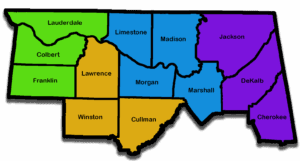
Browse homes around Athens. The map also includes surrounding communities. Confirm each property's jurisdiction and proposed project with the responsible office; the search does not establish renovation approval.
Sharing is Caring:
Author