Jessica Hassan
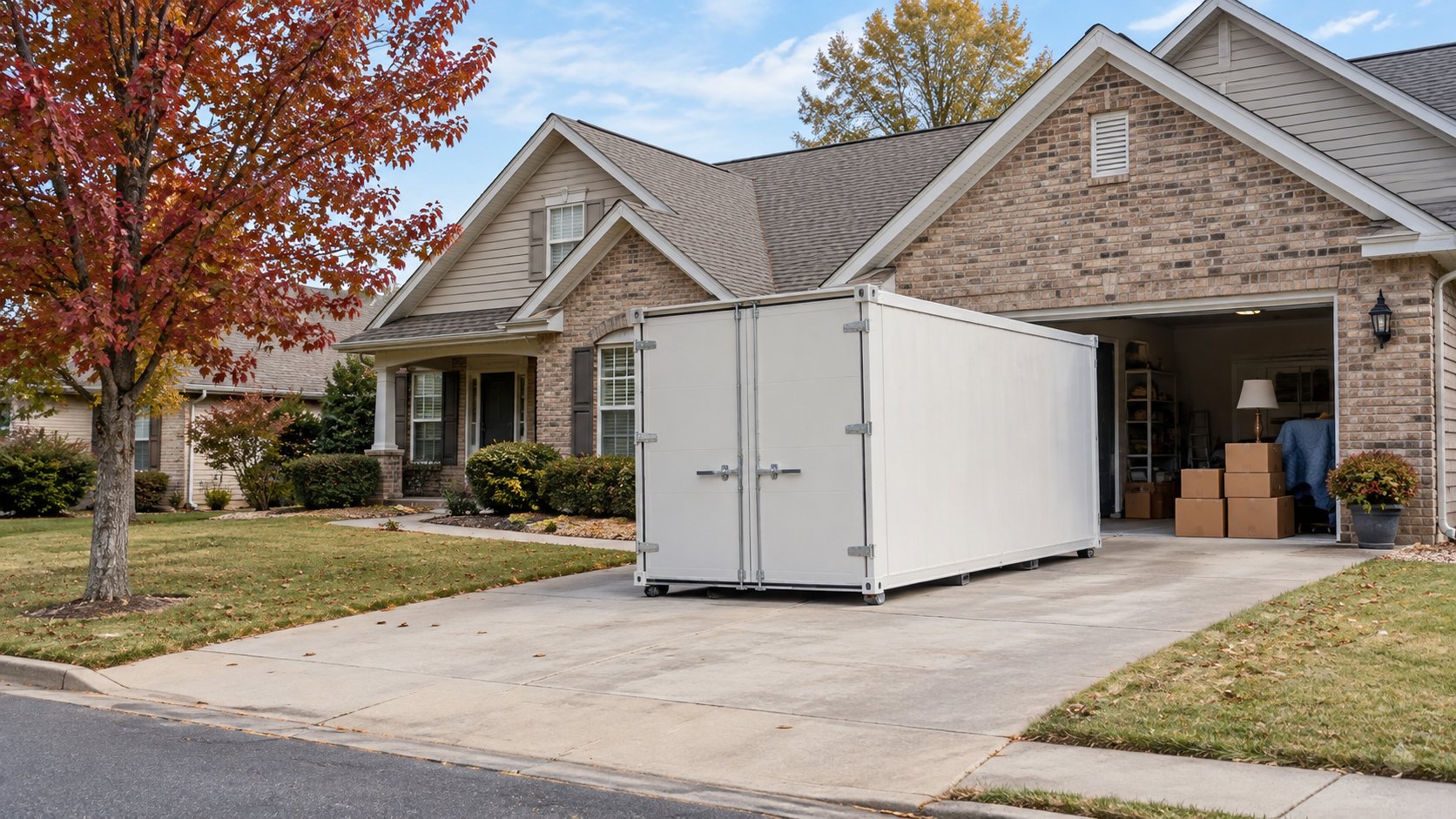
AI-generated generic moving-container scene; it is not a Huntsville property or proof that this placement meets the city’s permit rules.
A portable storage container can make a move easier when closing day, unloading and the new home’s layout do not line up neatly. In Huntsville, schedule its permit and placement before the delivery truck. The city’s portable storage structure ordinance requires a permit before placement on a residential lot without an active building permit. It also limits where the unit can stand, how large it can be and how long a permit lasts. A driveway that looks long enough is only the start of that check.
First, check the city and the kind of move
These are City of Huntsville zoning rules. A Huntsville mailing address does not prove a lot is inside city limits. The city’s GIS hub links city-boundary and address-service maps; use those as a starting point and ask Zoning to settle an address-specific uncertainty before ordering the unit. A private subdivision covenant, lease or homeowners association may add separate limits, so check those documents as well. City permission does not make a private restriction disappear.
The ordinance calls the container a portable storage structure (PSS): a transportable unit primarily for household goods and personal items on residential property for a limited time. Its definition also covers some trailers, boxcars and shipping containers when used for on-site storage in residential districts. For an ordinary move with no active building permit, obtain the city PSS permit before placing a unit on the residential lot. The ordinance places compliance responsibility on the property owner; the city’s online permit page says an owner, tenant or someone authorized by either may apply.
There is a separate construction case. The ordinance permits a temporary structure incidental to construction with an active building permit, provided it is removed when that work is completed or abandoned. The online portal says a PSS permit is not required when an active Inspection Department building permit exists for the address. Do not treat a contractor’s work at a different address, a planned future permit, or a storage unit unrelated to the work as an automatic exemption; give Zoning the actual address, building-permit status and purpose if this distinction affects your move.
Measure the unit and the lot before booking delivery
For the usual no-building-permit residential placement, Huntsville sets a maximum of 160 square feet of area and 10 feet in height. It requires at least 10 feet from the front property line, 5 feet from side and rear property lines, and 5 feet from other structures on the property. It also bars encroachment on public property or rights-of-way. A unit in a front yard must meet the city’s safe sight-distance triangle rules. These are measured from legal lines and structures, not simply from the street edge or where a car normally parks.
| Before the delivery call | What to record | Why it matters |
|---|---|---|
| Unit size | Vendor’s outside length, width and height. An 8-by-16-foot example occupies 128 square feet; a 10-by-16-foot example reaches the 160-square-foot cap. | Area is only one test; confirm actual dimensions and the height separately. |
| Proposed spot | Current survey or site plan, front/side/rear lines, nearby structures and the intended truck approach. | The 10-foot and 5-foot setbacks and no-right-of-way rule may eliminate a convenient driveway location. |
| Time on site | Requested delivery and pickup dates, plus any PSS permits issued for that lot in the prior 12 months. | The city limits a residential lot to three 30-day permits within any 12-month period; that does not promise an automatic 90-day stay. |
| Different living arrangement | Whether this is a multifamily dwelling and which unit and required parking or landscaped areas are involved. | There is a one-PSS-per-dwelling-unit rule, and the unit cannot occupy required parking or required landscaped space. |
The calculations in the first row are examples, not approved container sizes for a particular property. If a survey is missing or the driveway is tight, ask Zoning where it measures the property line and sight triangle before reserving a delivery slot. The ordinance also prohibits mechanical, plumbing or electrical installations or connections to the PSS. It is temporary household storage, not an extra powered room.
Apply, then coordinate the truck
Huntsville’s Zoning page links the PSS application and lists the Zoning Office at 256-427-5100. The online system says it accepts Visa or MasterCard, sends an email transaction acknowledgment, and then lets the applicant print the permit. If that payment route is unavailable, it directs applicants to apply in person at Zoning Administration. The publicly readable page does not state a fee amount, so obtain the current amount from the application or office rather than budgeting a guessed figure.
Once the permit is in hand, give the delivery company the approved position, unit dimensions and a pickup date that fits the permit. The ordinance requires a copy of the current permit and the placement date to be clearly posted on the exterior. It allows the Zoning Administrator to revoke a conditional permit for unsafe or unsanitary use or violation of the placement limits. Keep the permit, vendor dimensions, site plan and pickup confirmation together; a delivery receipt alone is not a city permit.
A storage container and a curbside cleanup solve different problems
The PSS ordinance concerns temporary on-site storage. It does not grant permission to leave discarded furniture, renovation waste or boxes at the curb. If the move creates a disposal pile, the separate Huntsville move-in cleanup guide sorts ordinary boxes, bulk items, contractor debris and other materials under the city’s collection rules. Use that as a second decision, after checking whether the physical address receives City residential service.
Conclusion
For a Huntsville move, the dependable order is: establish city jurisdiction, read any private property restriction, measure the container and possible location, obtain the applicable city permit, then schedule delivery and pickup. The city’s footprint, setback, sight-distance and 30-day limits can change the plan before a truck arrives. An active building permit creates a separate construction case; verify that the exemption actually fits the address and purpose instead of assuming every remodel qualifies.
Want Personalized Real Estate Help?
If you are comparing Huntsville-area homes and planning the move between them, contact me. I can help organize the timing and property questions while Zoning and the moving company answer the permit and delivery specifics. You can also explore homes across the broader Huntsville area; a listing cannot establish city jurisdiction, driveway setbacks, HOA terms or PSS approval for a particular lot.
Sharing is Caring:
Author