Jessica Hassan
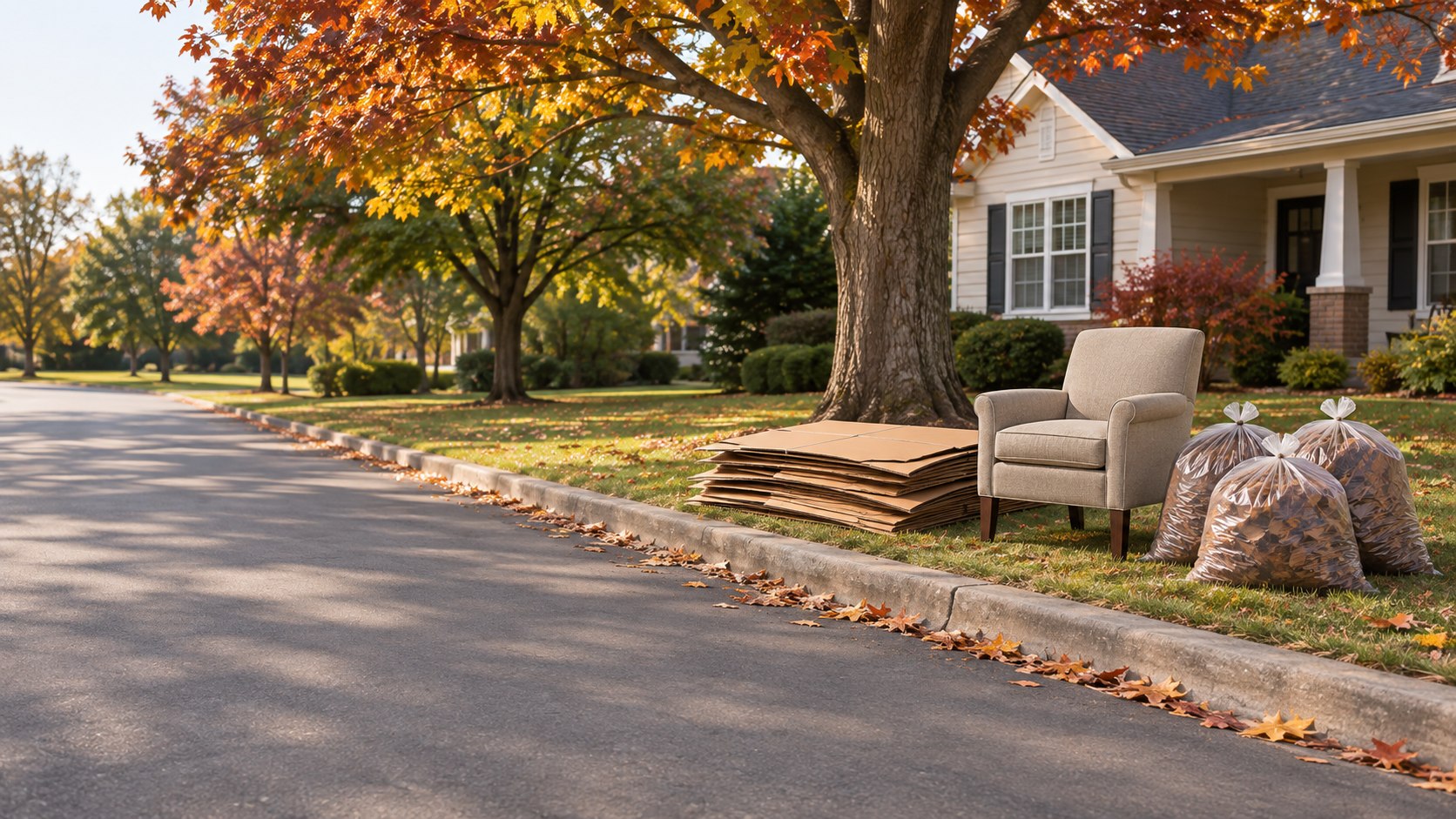
After a Huntsville move, the cleanup pile rarely fits one bin: cardboard, an old chair, yard trimmings and renovation scraps need different decisions. The City of Huntsville curbside collection guide describes household garbage and residential bulk trash separately. First confirm that the physical address receives City residential service; a Huntsville mailing address alone does not establish the collection route. Then sort by material and who produced it before putting anything at the curb.
Check the address and collection day first
The City directs residents to enter their address in My Huntsville Services to find the garbage collection day. Its 2026 schedule also lists holiday shifts, including a one-day delay for Veterans Day on November 11. Check the live route page for the address and week you actually need. If a recently occupied home has no City cart, the City service-request page includes a request for a cart after a move; the Sanitation Office number shown there is 256-883-3964. Do not assume a neighboring street shares the same pickup day.
Sort the pile before it reaches the curb
The City says its residential bulk collection can take containerized yard waste, junk and rubbish, and that boxes, furniture and electrical appliances can be placed out for trash collection. It separately allows nonhazardous building material from improvements the homeowner performed, provided that material is containerized. Contractor or commercial-project debris is excluded. These distinctions matter more than whether everything fits in a pickup truck.
| Move-in item | City curbside direction | Next check |
|---|---|---|
| Flattened moving boxes and ordinary furniture | The City lists boxes and furniture among trash collection items. | Keep the pile behind the curb and clear of drains, sidewalks and utility equipment. |
| Appliances | The City lists refrigerators, washing machines, water heaters and microwaves as curbside electrical appliances. | Check the current collection guide before setting out an unusual item. |
| Grass, leaves, clippings and small debris | Put material that fits in a container into one; bagged material may not exceed 50 pounds. | Keep bags or piles unblocked and inspect current limits or charges for larger piles. |
| Homeowner-generated minor building material | Containerize eligible nonhazardous planks, boards or siding from the homeowner’s own work. | Confirm the material qualifies; shingles, concrete, bricks and cinder blocks are excluded. |
| Contractor work, commercial work or hazardous material | City residential curbside collection does not take these under its stated rules. | Arrange an appropriate separate route; do not mix them into the household cart. |
The City specifically excludes dirt, rocks, bricks, cinder blocks, shingles, concrete and limbs from land clearing. Paint, chemicals, solvents and medical or biological waste are also excluded. A refrigerator appears on the appliance list, but the guide does not answer every preparation question for a particular appliance; call the Sanitation Office before moving a questionable item.
Place accepted material so crews can reach it
The City curbside page says carts and debris should be out by 7 a.m. on collection day, behind the curb rather than in the street or gutter. Keep them off sidewalks and storm drains and away from utility lines, poles and boxes. Bags and piles should not be blocked by cars or vegetation. The City says tree limbs cannot exceed five feet in length. Its page gives volume thresholds and possible charges for some yard-waste piles; because the fee wording differs across yard-waste descriptions, confirm the current charge with Sanitation before planning a large cleanup.
A green household-garbage cart is for regular paper products and food waste. The City warns it will not collect a cart containing construction debris or other unauthorized material, and trucks will not return for a cart put out late or blocked. Keeping the bulk pile separate from the cart prevents a move-in cleanup from disrupting normal household pickup.
Send the remaining material through a separate route
The City’s recycling page points to separate recycling and household-hazardous-waste information. Jessica’s Huntsville recycling and hazardous-waste guide explains that next sorting decision in more detail. Confirm current operator instructions before leaving material at a recycling or disposal site. For contractor debris, ask the contractor how removal is included in the job rather than assuming City collection will absorb it.
- Look up the exact address and collection day before setting out a pile.
- Separate ordinary trash, accepted bulk items, recyclable material, excluded hazardous material and contractor debris.
- Containerize small yard waste and eligible homeowner improvement material; keep bags within the City’s stated weight limit.
- For a large or unusual load, call Sanitation about eligibility and possible charges before the scheduled pickup.
Final Thoughts
A Huntsville move-in cleanup works best as a sorting job. The City describes a route for ordinary boxes, furniture, appliances and some residential yard and homeowner improvement material, but contractor debris and several heavy or hazardous materials need another plan. Use the actual address and current collection guidance before putting the pile out.
Want Personalized Real Estate Help?
If you are comparing homes in the Huntsville area, explore Huntsville-area listings. Listings do not establish City collection eligibility, pickup days or disposal rules for a property; check the physical address with the City. I can help you organize those move-in questions as you compare homes. Let’s talk.
Sharing is Caring:
Author