Jessica Hassan
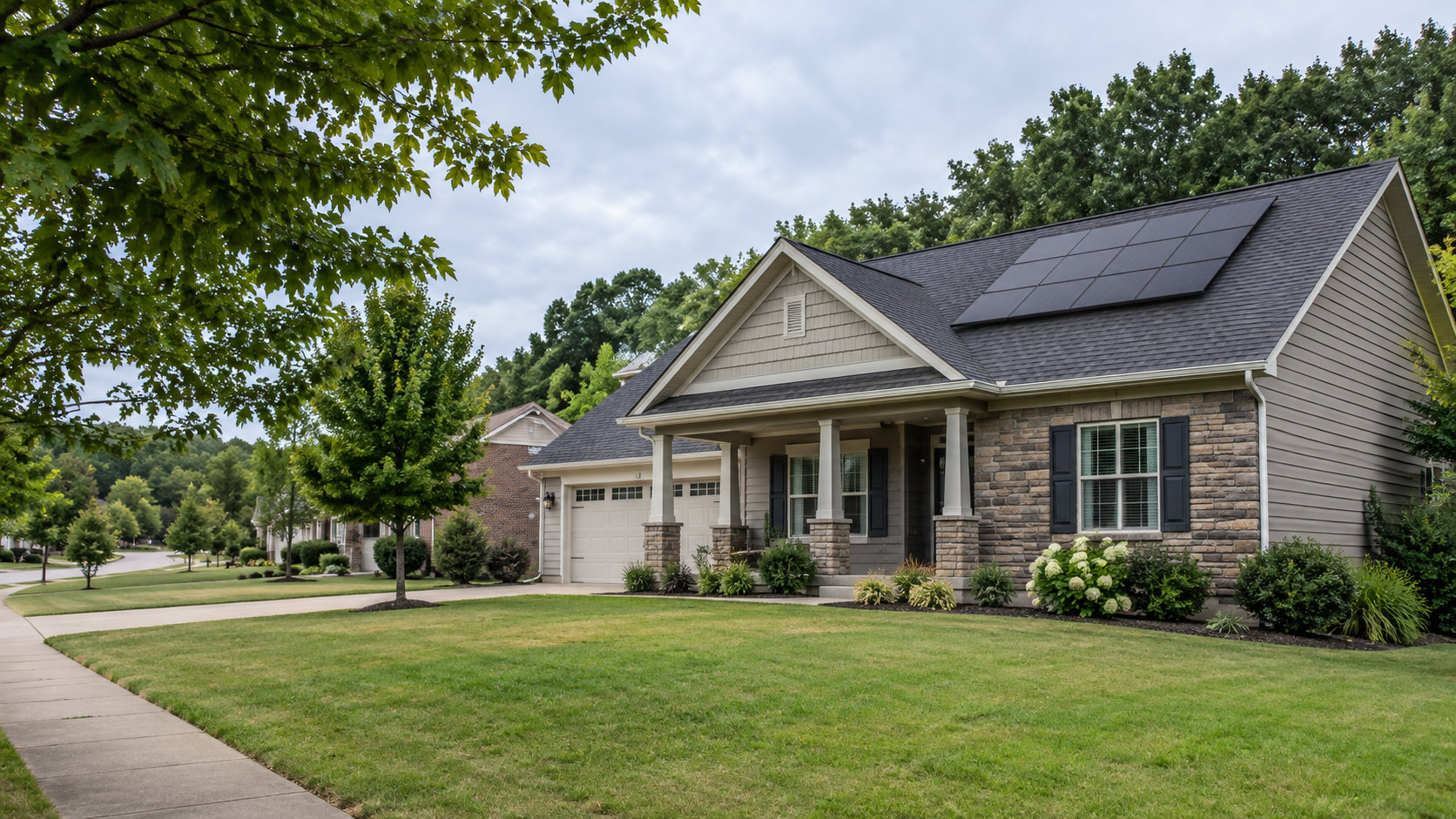
A listing says the house has solar panels. The seller shows a low electric bill. Before putting a dollar value on that benefit, a North Alabama buyer needs three different answers: who owns the equipment, what the system actually produces, and what the serving utility has approved for this address. A bill alone answers none of them. It reflects the previous household’s use and rate as well as its solar generation.
First, find the contract that follows the roof
The U.S. Department of Energy’s homebuyer guide says to ask about agreements tied to the panels and distinguishes a seller-owned system from one owned by a third party. The distinction changes the closing conversation. Ask for the signed purchase, finance, lease or power-purchase agreement—not just a listing description—and have the people handling the transaction confirm what conveys and which obligations remain.
- Owned outright: Request the purchase receipt and any warranty or service paperwork. Confirm that no separate balance, security interest or third-party ownership claim remains; do not infer that from the panels being attached to the roof.
- Financed purchase: Ask for the current payoff statement and the lender’s written terms for payoff or an allowed assumption. The Consumer Financial Protection Bureau describes payoff by the seller or legal assumption by the buyer, if the lender permits it, as common sale paths for an outstanding solar loan. The purchase contract should make the chosen path and its deadline clear to the closing professionals.
- Lease or power-purchase agreement: The equipment may belong to someone other than the seller. Obtain the complete agreement and written transfer instructions, including approval, payments, possible increases, maintenance, roof-work responsibilities, buyout and end-of-term terms. Under a lease the household generally pays for use of the panels; under a power-purchase agreement it pays for generated electricity, as the CFPB explains. Do not assume either contract automatically transfers with the deed.
For example, a buyer might see “paid-off solar” in the remarks while the seller’s documents show a loan payment. That is a document gap, not a reason to guess which party will pay it. Ask the seller, lender and closing or title professional to reconcile the agreement and payoff or release evidence before treating the array as a free-and-clear part of the price. Contract and title questions deserve a qualified professional’s review.
A roof and an inverter have their own timelines
The equipment can work while the roof beneath it is nearing repair. Ask when the roof and array were installed, whether mounting and roofing work were permitted where required, who installed the system, and whether there have been leaks, removals or repairs. DOE specifically points buyers to the roof’s age relative to the panels, the inverter type and age, maintenance history and warranty paperwork. It notes that a central string inverter may need replacement before the panels do; a system with panel-level microinverters has a different layout. Neither age nor a green indicator light proves condition.
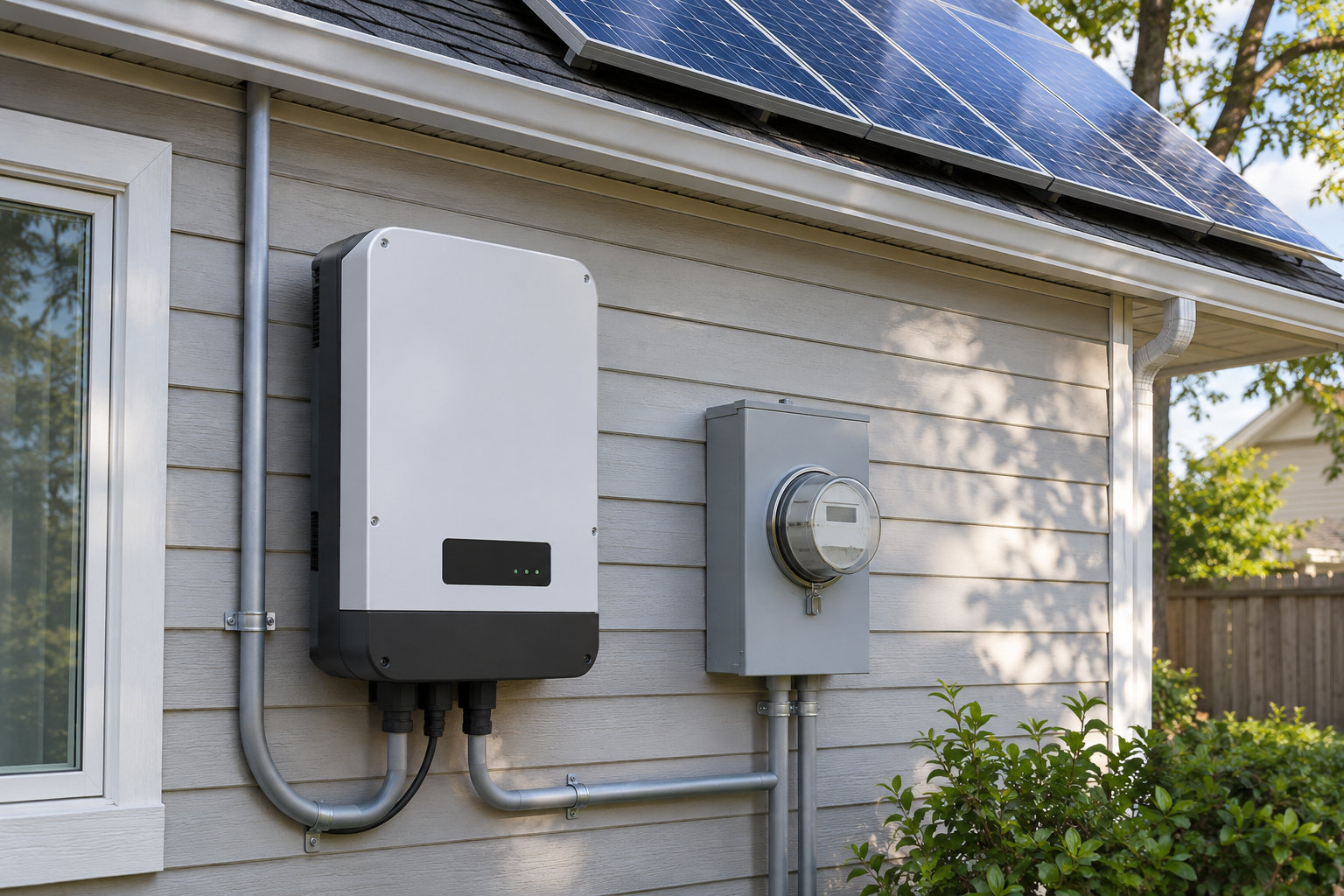
The illustration shows a wall-mounted inverter near a meter; it is a prompt to identify the actual equipment, not a model for every house. Request component model numbers, installer contacts, the monitoring account, service records, and the actual warranty terms and transfer process. If there is a battery, identify its age and warranty separately; a rooftop array by itself is not proof of backup power during an outage. A qualified roof and solar professional can evaluate condition and the cost of any roof work that requires panel removal. For a home inside the City of Madison, the separate address-based permit-record guide explains how to search city records; that city portal is not a region-wide permit search, and a record search is not a physical inspection.
Rebuild the energy story from three records
Ask for a year of solar monitoring production, a year of electric bills and the utility’s interconnection or rate paperwork for the address. Production data estimates what the array generated. Bills show what the previous household paid after its own use, utility charges and any applicable credits. The interconnection and rate records explain how this provider treats a customer-owned generator. Those are different measures: a large summer solar total does not promise a particular winter bill or a buyer’s future savings, especially if household use or the applicable rate changes. DOE recommends reviewing production over time and getting monitoring access; unusual drops call for a closer equipment question, not an immediate price conclusion.
There is no single North Alabama solar billing rule to substitute for the actual electric provider. For one local example, Huntsville Utilities’ Solar Connect application requires system details before it approves interconnection and states that an application itself is not permission to connect; written authorization is required. Alabama Power describes a separate interconnection process and rate rider for its customers. A house served by another utility may have different terms. Ask the actual provider which approval, metering and rate arrangement is in force at the address and what, if anything, the new account holder must do. Do not use the seller’s bill as proof that an approval or credit automatically carries over.
Turn the gaps into a purchase decision
Keep one short file for the transaction: the equipment and finance or third-party agreement; lender payoff, release or transfer instructions; roof and system installation, inspection, service and warranty records; production and utility bills; and utility interconnection and current rate information. Mark each item as received, still requested or requiring a specialist’s answer. This is more useful than trying to convert one electric bill into a promised annual saving.
If the seller supplies the contract and monitoring history but cannot produce a transfer approval, the next action is to ask the contract company what it requires and when. If ownership is clear but the roof shows possible trouble, arrange an appropriate roof and solar evaluation before assigning a benefit to the array. If the utility cannot confirm the account-specific arrangement, treat the projected credit as unresolved. Your real-estate, closing, lender, insurance and qualified solar or roof professionals can each answer their own piece; none should be replaced by a general “solar adds value” claim.
Conclusion: price the verified package, not the panels alone
Rooftop solar can be a useful feature of a North Alabama home. Its value to this buyer depends on the actual ownership terms, remaining obligations, roof and equipment condition, measured production and the serving utility’s rules. Ask for the paper trail early enough that missing answers can be resolved in the transaction, then compare the house on what is documented rather than on a remembered monthly bill.
Want Personalized Real Estate Help?
Considering a North Alabama home with rooftop solar? I can help organize the property and contract questions for a buyer’s review while the utility, lender, closing professionals and qualified inspectors verify the technical and legal details. Contact me with the address and what the seller has shared so far.
Sharing is Caring:
Author