
The first chilly morning in a new North Alabama home can bring an unfamiliar message on the thermostat: AUX HEAT. If your previous house used a furnace, it is tempting to assume something has failed—or to choose Emergency Heat because it sounds stronger. Those two labels mean different things.
This guide is for learning an existing heat-pump system: identify its backup source, understand the controls, and recognize when a service call is the next step. The local reason to learn it before winter is practical. Huntsville Utilities’ 2026 winter snapshot describes increased heating demand during its January and February cold spells. That is a past service-area example, not a forecast or a prediction of your bill.
First, find out what is heating the house
A heat pump moves heat instead of producing all of it through electric resistance or burning fuel. An air-source system gathers heat from outdoor air and transfers it indoors; in cooling mode it moves heat the other way. The Department of Energy’s Energy Saver guide explains that process. Cold outdoor air does not, by itself, mean the system has nothing useful to collect.
An outdoor cabinet alone cannot settle whether you have a heat pump or central air conditioning: they can look nearly identical. Start with the equipment manual and safely accessible manufacturer/model labels, then find the matching manufacturer instructions. Trane’s identification guide also explains HSPF or HSPF2 heating-efficiency information. A thermostat’s available menu is a clue; the actual equipment and its setup are what matter.
Next identify the backup. Some systems have electric-resistance strips inside the indoor air handler. A dual-fuel system pairs an electric heat pump with a gas furnace and switches heat sources. Do not apply an electric-strip cost assumption to a furnace-backed system, and do not assume every heat pump has either type of backup.
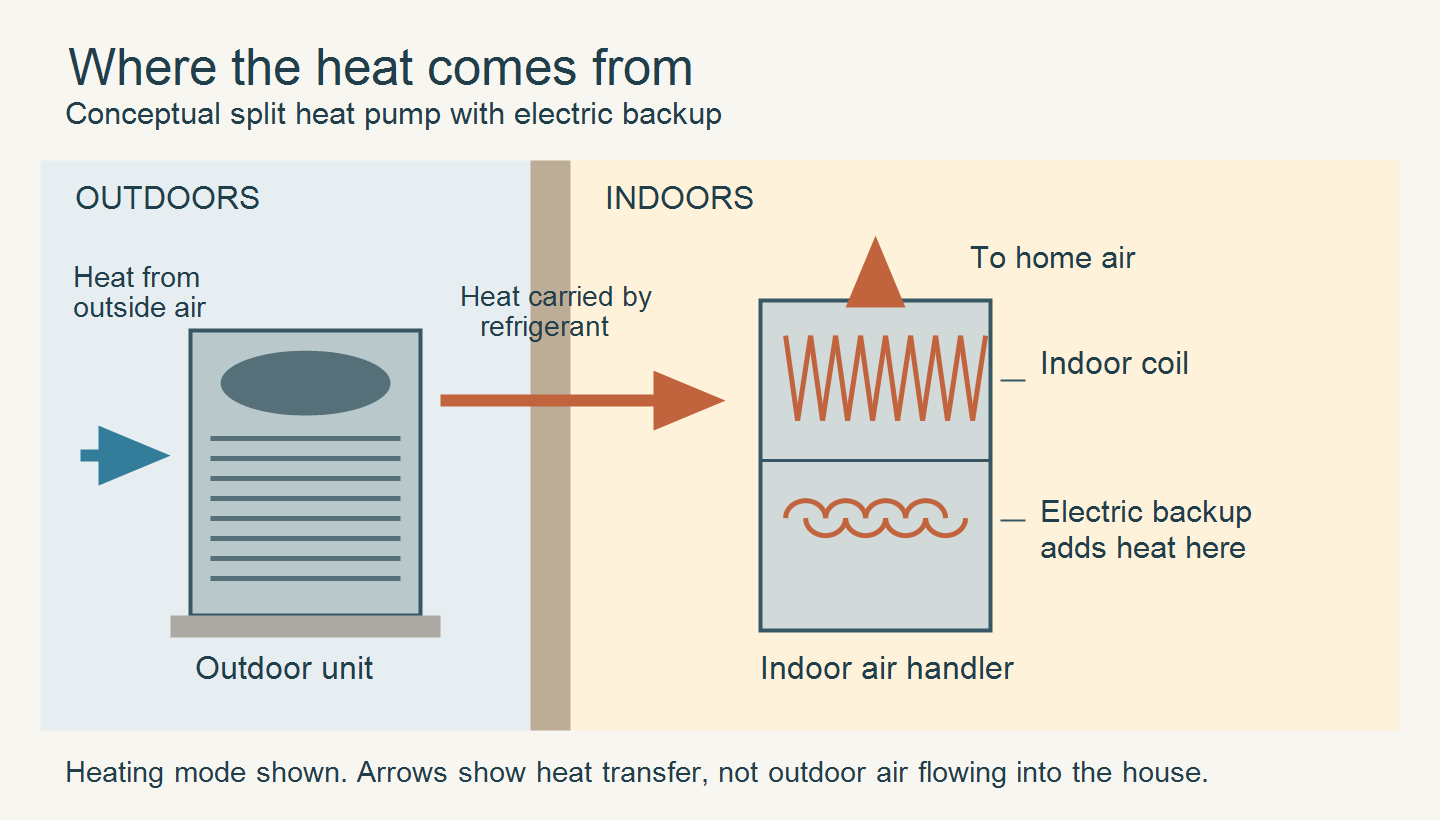
The drawing locates the two different sources: heat arrives at the indoor coil from the outdoor system, while electric backup adds heat inside the air handler. It does not show a duct carrying outdoor air into your living room. Use it to understand the distinction, not to locate components or open a cabinet.
Read HEAT, AUX and Emergency Heat as different instructions
Trane’s auxiliary-heat explanation distinguishes automatic assistance from manually selected emergency operation. For a system with that equipment and control capability, the practical comparison is:
| What you see or select | What it means | Your next decision |
|---|---|---|
| HEAT | Normal heating operation; the controls can call for backup as configured. | Use the normal mode and the instructions for your system. |
| AUX or AUX HEAT | The controls have called for supplemental heat. Cold conditions, defrost or a large temperature increase can trigger it. | An indicator alone is not a failure diagnosis. Note whether the home reaches its setting and whether the behavior changes. |
| Emergency Heat / EM HEAT | A manually selected mode that bypasses the heat pump and uses the backup source. | Use the equipment-specific instructions when the heat pump has failed, and arrange HVAC service. |
Emergency Heat is not a routine “extra cold outside” setting. TVA’s winter advice emphasizes that AUX is generally automatic and should not simply be overridden. The useful question is whether the system is maintaining the home, not whether you can make the AUX label disappear.
Change the schedule thoughtfully, not just the number
Moving often means inheriting someone else’s thermostat schedule. Read its weekday, weekend and away settings before copying the routine from your previous home. A large jump after a deep setback can call for electric backup; the DOE guide, printed pages 16–17 advises against manual setbacks that cause resistance heating to come on and recommends controls suited to heat pumps.
For example, suppose a previous owner scheduled 60°F overnight and you want 68°F in the morning. That eight-degree recovery is a useful question for the technician or thermostat manual: can this control recover with the heat pump, and how is backup staged? The numbers are an example, not a recommended overnight temperature. Do not disable backup or change installer settings to chase a smaller bill.
TVA recommends making modest increases rather than setting the thermostat far above the temperature you actually want. Its advice also includes checking filters monthly and keeping vents clear of furniture. Follow the equipment’s filter specification and replacement instructions; a dirty filter and a moving box against a vent are useful things to address before blaming the thermostat.
Recognize defrost without dismissing a heating problem
In cold, moist conditions the outdoor coil can collect frost. During defrost, refrigerant flow reverses briefly to warm that coil; the system then returns to heating. Trane’s defrost guide describes temporary steam, a swooshing sound, a stopped outdoor fan and a possible AUX indication. Those observations can be normal parts of that cycle.
The pattern matters. Trane recommends service when defrost seems constant or cycles keep lengthening while frost and ice build up. Do not use a generic photograph or a single time limit to diagnose your unit. Record what you see from a safe distance and give the technician the model, thermostat message and whether room temperature is falling.
If the air feels cooler than your old furnace’s output, judge the room’s temperature too. Trane’s heating troubleshooting guide explains that heat-pump air can feel less hot. It also notes that a fan set to ON may circulate air between heating calls; AUTO follows the calls. Check your normal user settings and filter, then seek service if heating still is not working. These observations do not call for opening panels or attempting refrigerant repairs.
Make the heating handoff useful to the next owner
For a purchase, put the outdoor unit, indoor equipment and thermostat model information together with the inspection findings and service records. Ask for a clear explanation of the backup source and normal winter controls. If a heating concern is unresolved, turn it into a specific professional follow-up while you can still plan the timing and expense.
For a sale, leave the matching manuals, filter information and service documentation with the house. Describe known operation accurately rather than assuring a buyer that AUX never comes on. A short demonstration of normal user controls can be more useful than a photograph of the thermostat set to a comfortable number.
Keep the broader winter tasks on their own list. My North Alabama first-freeze checklist covers outdoor water, absence planning and power interruptions. A thermostat mode is not an outage plan, and understanding AUX does not complete the rest of the home’s cold-weather preparation.
Final Thoughts
The goal is a home you understand: which equipment supplies heat, what the thermostat is asking it to do, and which changes deserve professional attention. Start by identifying the system and reading its normal controls. Keep a brief record of unusual behavior so a service conversation begins with observations instead of guesses.
Sources reviewed October 28, 2026. DOE guide: August 2022; TVA article: January 23, 2026; Trane auxiliary-heat guide: September 23, 2024; defrost guide: February 19, 2026. The other linked pages show no publication or update date in the retrieved text. Featured image: AI-generated conceptual illustration.
Want Personalized Real Estate Help?
If you are buying, selling or relocating in Northern Alabama, I can help you organize the property questions and follow-ups that belong in your transaction timeline. Contact me to talk through your move and the information you want to have in hand before possession.
Sharing is Caring:
Author