Jessica Hassan
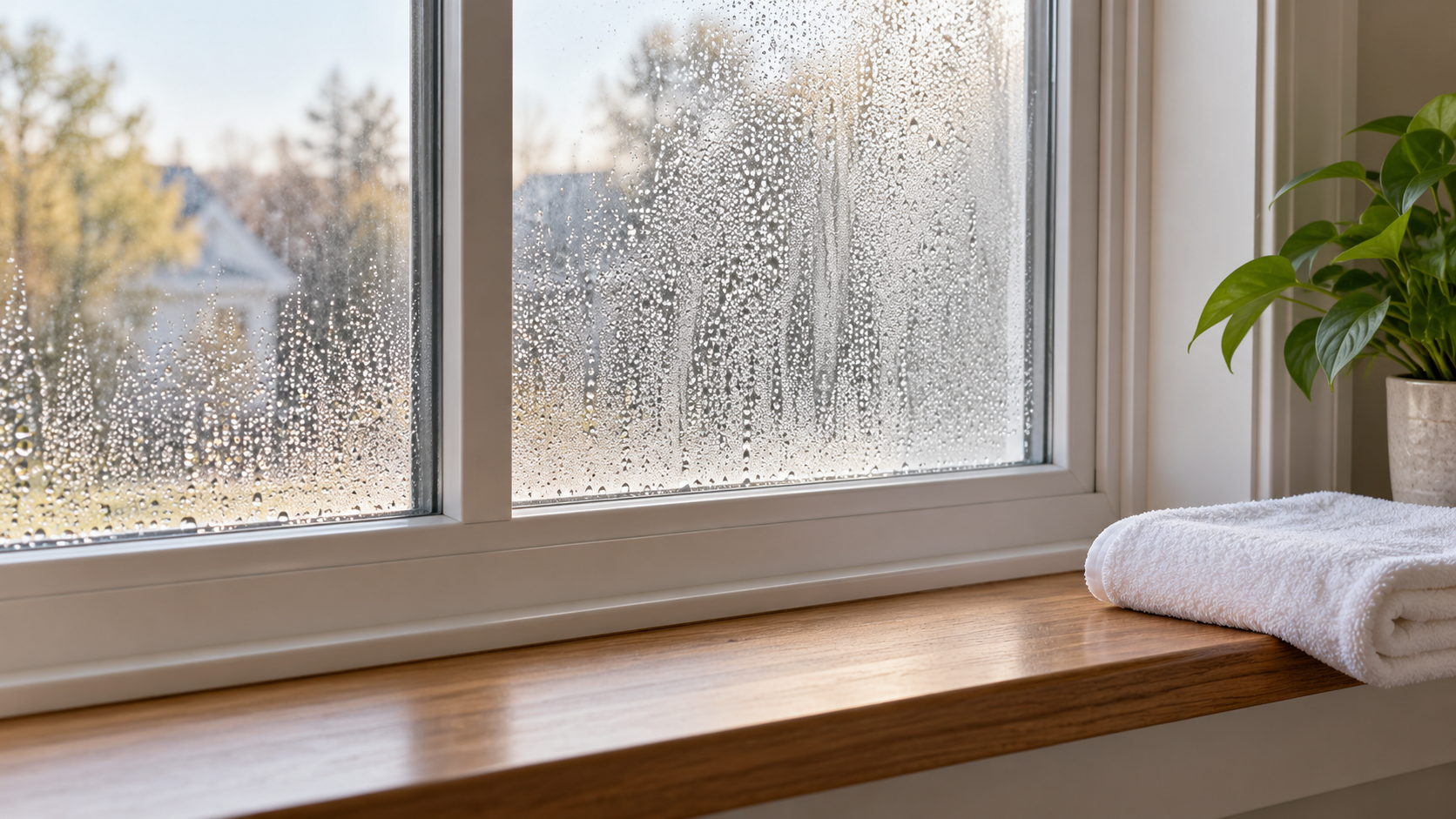
Water on a windowsill does not automatically mean the window is leaking. It also does not mean the problem is harmless. Before a North Alabama homeowner buys equipment or paints over a stain, the useful task is to identify the pattern, limit further wetting and decide what kind of assessment is needed.
Is the water arriving as a leak, or forming on the surface?
Condensation is water vapor becoming liquid on a sufficiently cold surface; a leak carries liquid water through a failed connection or opening. EPA’s moisture-control explanation describes both mechanisms. Cooking and showers add moisture indoors, while plumbing and building leaks introduce water another way. The same house can have more than one source.
A wet window is a clue, not a diagnosis. Note whether moisture is on the room-facing glass, around the frame, or below it; when it appears; and whether it follows bathing, cooking, rain or use of a fixture. Do not remove trim or open a wall to settle the question yourself. A contractor needs those observations before recommending a window replacement or repair.
For North Alabama newcomers, both warm-weather humidity and cold surfaces matter. The National Weather Service’s Huntsville climate narrative describes humid summers and generally cool, variable winters. That regional context explains why the problem can look different across seasons; it does not establish the cause in any particular home.
What should you measure before buying equipment?
Use an indoor relative-humidity meter rather than judging the room by how warm or cool it feels. University of Georgia Extension’s prevention guide recommends keeping relative humidity below 60 percent, ideally between 30 and 50 percent. These are general moisture-management targets, not a guarantee that every cold window will remain dry.
Keep a simple log: room, date and time, temperature if your meter provides it, relative humidity, visible wetness and recent activities. Follow the meter’s placement instructions and allow it to settle before comparing readings. Record ordinary conditions and the conditions when the symptom returns; do not average away a repeated bathroom or bedroom problem.
For example, a room that looks dry during an afternoon showing but develops wet interior glass after evening showers presents a different investigation from a ceiling stain that grows after rain. These are hypothetical patterns, not proof of either cause. Bring the log and dated photographs to the relevant inspection instead of purchasing a larger dehumidifier on the first observation.
Which next step fits the pattern?
Use the following as a way to organize observations, not as a do-it-yourself diagnostic test. Address active water entry promptly rather than waiting for a long monitoring period.
| Observed pattern | Useful next step |
|---|---|
| Moisture follows showers or cooking on cold interior surfaces | Record humidity and use functioning outdoor exhaust; persistent wetness needs assessment. |
| Water appears at a plumbing connection or after a fixture runs | Arrange plumbing investigation and repair; lowering room humidity does not fix a leaking connection. |
| A stain or wet area returns after rain | Investigate the building envelope and exterior water route, rather than assuming condensation. |
| Dampness persists with no clear trigger | Bring the log to a qualified building/HVAC professional; do not conceal the evidence. |
If the pattern points outdoors, the North Alabama roof-water and drainage walk-through follows runoff from gutter to outlet and receiving ground. That is a different investigation from indoor humidity; fixing one does not prove the other is resolved.
Why can a cool room still feel damp?
Cooling and moisture removal are related but not identical. The Department of Energy Building America dehumidification guide explains that an oversized air conditioner can reach the thermostat setting before running long enough to remove sufficient moisture. Low cooling demand can also leave a separate moisture load to manage. Simply choosing a colder setting does not establish the underlying problem.
Ask an HVAC professional to assess system operation, sizing, drainage and any need for dedicated humidity control. A proposal should explain the measured problem and why the selected equipment addresses it. Do not interpret this guide as a recommendation to replace a working system or install a whole-house dehumidifier in every North Alabama home.
For everyday source control, use kitchen and bathroom exhaust that discharges outdoors, not into an attic, and maintain appliances according to their instructions. EPA identifies these exhaust routes as important moisture controls. Opening windows is not an automatic answer when outside air is humid. Changes to crawl-space ventilation, insulation or vapor barriers need a house-specific building assessment; this is not a retrofit plan.
When should you stop observing and bring in help?
Visible mold, recurring dampness or water-damaged materials call for attention to the moisture source, not a cosmetic cover-up. EPA’s residential mold guide recommends drying water-damaged materials within 24–48 hours and warns against painting or caulking moldy surfaces. That drying window is a prompt to act, not permission to delay repair.
EPA calls for experienced professional help when sewage or other contaminated water is involved. Extensive damage, suspected hidden growth or an affected HVAC system also changes the response; do not run a system known or suspected to be mold-contaminated. For health concerns, speak with a health professional before cleanup. This article does not identify mold species or prescribe a cleanup chemical.
For a purchase, obtain the appropriate inspection and assessment within your contract’s actual timelines. Request known repair invoices and the explanation of the original cause, not just a photograph of fresh paint. For an occupied rental, promptly report leaks and moisture to the owner or manager. Keep the report, photographs and response together so the recurring pattern is not lost.
Final Thoughts
The useful first decision is whether you need a leak repair, better control of indoor moisture, or a broader building assessment—not which paint or appliance to buy. Record the pattern, take safe observations and use measurements to explain the problem. A dry-looking surface on one visit cannot answer every moisture question.
Want Personalized Real Estate Help?
If moisture questions are affecting a North Alabama purchase or sale, I can help organize the property questions and records for the appropriate inspection. Contact me to discuss your plans; a qualified building or remediation professional should assess the physical condition.
Sharing is Caring:
Author

Sources and review notes
Sources reviewed October 30, 2026. General building guidance is not a property diagnosis. Featured image: AI-generated fictional illustration, not a photograph of a local home or evidence of mold.