
A patch of open ground can make it easy to picture a home near Moulton: a front porch, a workshop, maybe room for a garden. Before you settle on where those things will go, give the wastewater system a place in the conversation. A septic tank is only one part of that plan, and the space that looks available from the road may have several jobs to do.
For a rural Lawrence County purchase, the useful question is not simply whether someone says the land will “perc.” It is whether the evaluated site and proposed system fit the home you intend to build—and leave you comfortable with the rest of the property. Here is how to organize that conversation without trying to become your own soil evaluator or system designer.
Start with the actual parcel and the sewer question
ADPH advises buyers to check sewer availability before purchasing land for a home; where sewer is unavailable, the soil must be evaluated for onsite wastewater disposal. Read the state’s before-you-buy guidance. A Moulton mailing address is a starting point for locating the property, not confirmation that a particular service reaches it.
Ask the relevant sewer provider about the exact parcel and proposed connection. If the answer is no, or remains unclear, take the parcel information and your intended use to the health department before treating a septic system as settled. Keep the written response with the other property documents; “there is a line nearby” and “this home can connect on these terms” are different answers.
Lawrence County Health Department lists onsite-sewage applications and permits among its environmental services. Its local service listing is the appropriate Alabama starting point. Be careful with web searches: other states also have a Lawrence County, and their processes are not the ones for this property.
Understand why the drainfield needs its own space
A conventional septic system includes a tank and a separate underground drainfield where wastewater receives further treatment through the soil. The EPA’s system illustrations explain this physical relationship. The picture below shows the basic idea, not the design or dimensions for a Lawrence County lot.
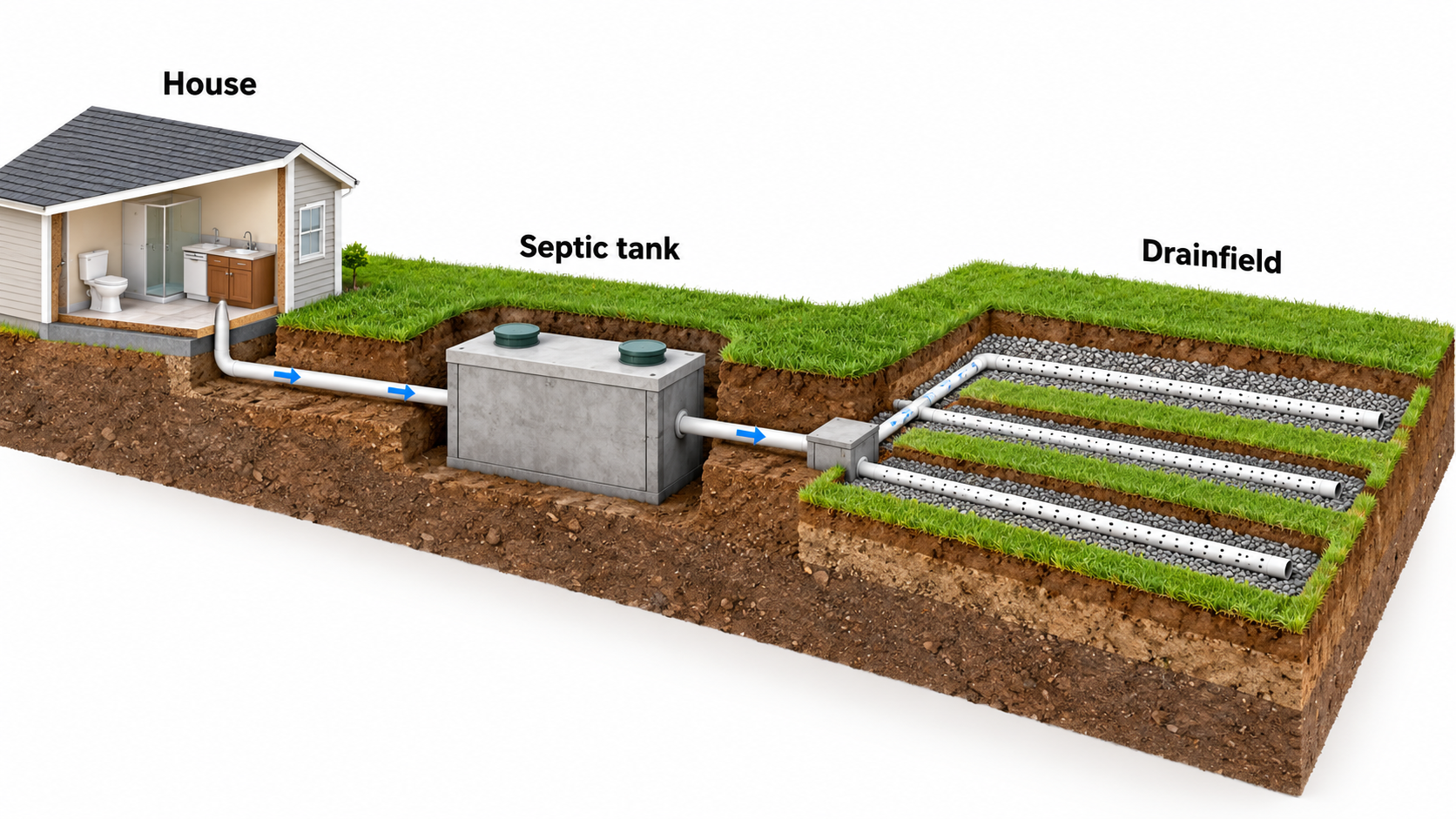
That distinction matters when you start placing the driveway, garage or future outbuilding. Do not sketch the house first and assume the wastewater equipment can be tucked into whatever space remains. Ask the designer to explain the treatment area on the plan in plain language, then compare it with the way you hope to use the yard.
ADPH’s CEP-2 instructions call for a scaled plot plan showing the proposed system and both primary and replacement effluent-disposal areas as protected areas. The state application instructions (PDF) make this more than a question about where the tank sits. Ask which area must remain available for replacement and how that affects your plans before arranging improvements there.
Bring the house plan into the site evaluation
The state application asks for bedroom and dwelling counts that determine design flow, along with information such as water source, wells and basements. If you are comparing a smaller plan with one that adds bedrooms, tell the evaluator now. “We may add that later” is worth discussing before the land purchase, not after the design is finished.
Bring a simple list of your priorities: the intended home, likely driveway approach, any workshop or pool you hope to add, and whether plans may change. This is information for the professional to evaluate, not permission to draw your own system. Ask for the assumptions in writing so you can see whether a later house-plan revision changes the advice.
ADPH’s site-evaluation form records the testing method, soil layers and restriction depth; it also identifies the most restrictive test result limiting the primary field design. Reviewing the actual site-evaluation form (PDF) can help you ask better questions. A brief “passed a perc test” description does not tell you which location was tested, what the proposed home was, or what limitations were found.
For an older report, ask the local office and evaluator whether it covers the same parcel configuration and intended use. Request the complete report rather than a cropped photograph of one result. Match the test locations to the plot plan and let the responsible professional explain what the findings mean. A soil result from the next property is not a substitute for your own site assessment.
Do not use acreage as a shortcut for suitability
ADPH warns that shallow, wet or slowly draining soils and limited lot size can prevent a conventional system from working properly; some sites require an engineered design, and some are unsuitable. That is a reason to investigate the particular site, not a claim that all land around Moulton has the same conditions.
The useful comparison between two parcels is therefore more detailed than acreage and price. Ask what usable area the evaluation identifies, what type of system is proposed, what work the installer’s estimate covers, and what maintenance that design will require. Avoid assuming that an engineered option will always be available or that a larger parcel automatically makes the answer inexpensive.
EPA notes that system choice depends on factors including soil, slope, lot size, home size and applicable rules. Use its septic-system questions for orientation, then get a site-specific explanation from the local professionals. A general online price or diagram cannot price or approve the system for your home.
Keep the stages separate when planning a purchase
ADPH requires an application and an issued Permit to Install before construction of the onsite system begins, and directs owners to use an Alabama Onsite Wastewater Board-licensed installer. Soil information, a proposed layout and permission to construct are related, but they are not interchangeable documents.
Ask your real-estate agent and the appropriate contract professional how to make the time for evaluations, estimates and decisions explicit in your purchase arrangements. The purpose is to know what remains unresolved before you commit—not to assume that a seller’s verbal assurance or your preferred closing date can replace the approval process. Confirm current forms, fees and scheduling directly with the county office.
If a home is already there, ask a different set of questions
ADPH says an owner or agent can request septic information from the local health department; the completed permit, also called the Approval for Use, includes a diagram of the installation. Start with those system records and the seller’s maintenance history. Ask a qualified professional to assess present condition and whether the existing arrangement matches your intended use; old paperwork alone is not a current-condition inspection.
ADPH recommends keeping maintenance records and protecting the drainfield from vehicles, digging, buildings and hard surfaces. Its maintenance guidance can help you recognize why a convenient-looking parking area or planned patio belongs in the discussion. Do not open or enter a tank yourself; use the health department or a licensed septic professional for system concerns.
Make the first local call useful
The published Environmental Office number is 256-974-8849. The office is listed at Lawrence County Health Department, 13299 Alabama Highway 157, Moulton, Alabama 35650. Check the official contact page and call before making a special trip. These contact details were checked October 24, 2026.
Have the parcel identifier, available survey or plat, existing system records and your proposed bedroom count beside you. Ask which evaluations are needed, who can perform them, which documents the office can provide and what the next review step is. If an answer depends on a site visit, record that as an open item rather than turning it into a yes.
Conclusion: fit the home and the land together
A rural home plan feels more solid when the wastewater questions are answered alongside the house questions. For a Moulton-area property, that means confirming service first, understanding the actual evaluated area, and seeing how the proposed home, primary field and replacement space fit together. You do not need to interpret soil science yourself. You do need clear documents and the right people explaining them.
That preparation gives you a practical basis for deciding whether to move forward, adjust the plan or keep looking. The goal is a property that supports the life you want to build—not a beautiful parcel with important questions postponed until after closing.
Want Personalized Real Estate Help?
If you are considering land or a home around Moulton, Lawrence County or elsewhere in Northern Alabama, I can help organize the real-estate questions around your priorities and coordinate the next conversations with the appropriate professionals. Contact me to talk through your buying, selling or relocation plans. Technical approval belongs with the qualified specialists; a thoughtful property search makes room for that work from the beginning.
Browse homes and land around Moulton. Keep the wastewater evaluation and room for your intended home plan on the checklist; a listing is not septic approval or a buildability determination.
Sharing is Caring:
Author