Jessica Hassan
A DeKalb County storm-shelter list is a place to start a plan, but it is not a live sign on a door. The county emergency-management agency now links a public sheet with two different headings: community storm shelters and safer places. The distinction matters when you are deciding what to ask ahead of severe weather—and it matters more than a dot that appears close to home on a map.
The DeKalb County EMA shelter page is the starting point for the current linked list. A separate March 13, 2025 PDF still circulates through the City of Fort Payne. Those sources do not show the same entries. The key task is to identify which source and which label supports a candidate before you ask an operator about access.
Read the label before choosing a destination
In the EMA-linked sheet checked November 16, 2026, eleven entries sit under “Community Storm Shelters.” Ider’s library basement appears separately under “Safer Places.” The older EMA PDF calls that second group “Community Safer Spaces” and expressly says those spaces are not certified safe rooms or storm shelters. It describes them as public or private buildings that may offer more protection than some homes or being outdoors or in a vehicle. That is an explanation of the program, not a guarantee that a particular room meets a construction standard or is open now.
| What the EMA source says | What you can use it for | What it does not establish |
|---|---|---|
| Community storm shelter | Identify a listed location to ask about in advance. | Today’s activation, entrance, space, accessibility or certification details. |
| Safer place / older “safer space” | Recognize a separately labeled option such as Ider’s library basement. | A certified safe room or storm shelter; the 2025 EMA PDF says it is not. |
| A name on an older PDF | Understand a prior public list and spot changes. | That the location remains on EMA’s current linked sheet or will open for a future event. |
A “community storm shelter” heading also does not, by itself, provide a design certificate or a current operating policy. If construction standard, accessibility or a particular household need is essential, ask EMA or the named operator for that specific information instead of treating either heading as a complete facility description.
The current sheet and the 2025 PDF do not match
The sheet linked from DeKalb County EMA includes a Cartersville entry that is absent from the March 2025 PDF. The older PDF includes Upper Sand Mountain/Parrish and Bread of Life entries that do not appear in the sheet checked November 16. This comparison shows why saving a screenshot of a list for next season can mislead you. It does not prove that an omitted building has closed or that a newly listed one is open at this moment.
The newer sheet gives one unusually useful capacity note: it says the Plainview School shelter in Rainsville is considered at capacity if students are on campus. That changes the planning question for a household that expected to use a school site during the day. It does not tell you when the school will be open to the public. Ask about the current access policy before treating it as your destination.
Turn a current row into a specific question
For a location on the current sheet, record its exact row and category, then ask DeKalb County EMA or the operator how that site is activated and how the public learns it has opened. Ask which entrance is used and whether your specific access need can be met. The sheet names locations but does not publish a live open/closed status, universal trigger, hours, pet rule or accessibility audit. Date any answer: a row in a list, a 2025 PDF and an operator’s current instructions are three different kinds of evidence.
For example, “Ider library basement” is a location label, while “safer place” is an EMA category. Neither answers whether that room will open for a particular warning or suit a mobility need. The current EMA sheet itself invites facilities interested in the Safer Place program to contact EMA, another sign that the roster is managed rather than fixed forever.
Keep the warning-time decision separate
The National Weather Service’s during-a-tornado guidance says that when your home is under a tornado warning, go to a basement, safe room or interior room away from windows. Its guidance for a person already in a vehicle is different: seek the closest sturdy shelter when possible; a vehicle itself is not a safe place during a tornado. Its Huntsville preparedness page notes a second severe-weather peak in November. If you are already at home under a warning, the immediate indoor option in NWS guidance matters more than setting out for a public site whose opening you have not verified. Follow current warnings and local emergency instructions.
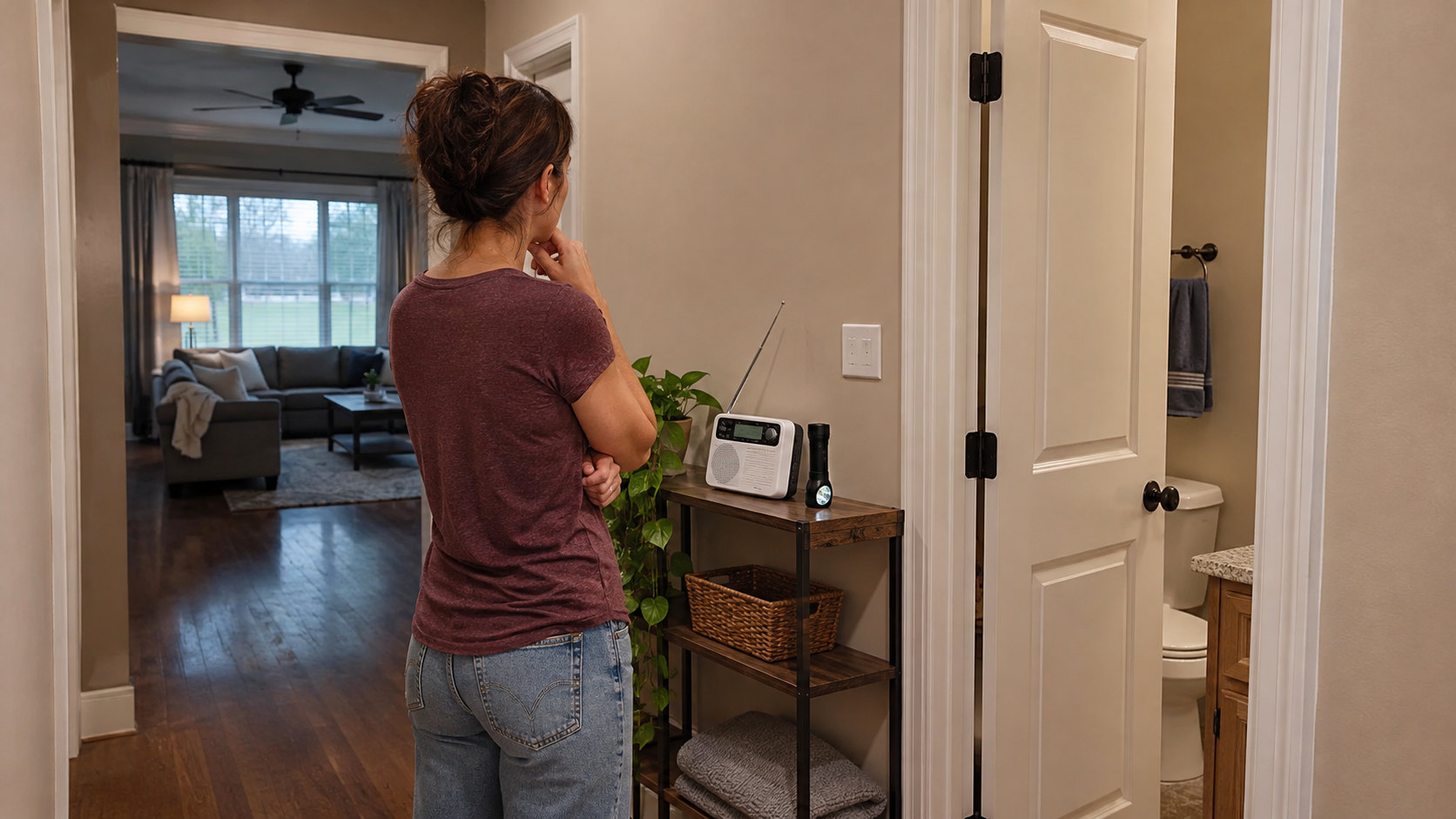
That home-versus-vehicle distinction is separate from the EMA roster: a row does not report a live door status during a warning. The featured image is a generic home scene, not a certified safe room or an assessment of a DeKalb property. For receiving the warning itself, see my North Alabama weather-alert guide.
Conclusion: use the latest list as an index, not a promise
Use EMA’s own current link as the location index, preserve the category beside any candidate, and get that site’s operating instructions from EMA or the operator before relying on it. The dated 2025 PDF proves the public roster has changed; it cannot supply today’s door status. If a warning arrives while you are at home, follow current warning guidance for immediate indoor protection.
Want Personalized Real Estate Help?
If you are comparing DeKalb County homes, I can help you organize the property questions that sit beside a household preparedness plan, while local emergency officials answer shelter-specific questions. Contact me to talk through the move. If Fort Payne is one of the communities you are considering, you can also explore Fort Payne-area homes; a listing does not establish access to a public shelter or the safest room in a particular house.
Sharing is Caring:
Author