
A house can be ready for holiday guests and still be missing a plan for its first hard freeze. The outdoor hose is connected, the heating service record is somewhere in a moving box, and nobody is quite sure who will check the house if the owners are away. Those are useful things to sort out while the weather still makes an outside walk-around easy.
For Northern Alabama homeowners, I would organize winter preparation around three questions: Where could this particular house lose water or heat? What can you handle now, before a weather alert? And who is responsible if you are moving, selling or traveling? This guide is a seasonal planning checklist, not a forecast or a substitute for the instructions for your home’s equipment.
Start with the house you actually have
Before buying a cart full of supplies, make a simple home-systems list. Note your water provider, heating system, outdoor faucets, irrigation equipment and any pool equipment. Add the plumber or service company you would call, the location of the household water shutoff, and whether someone has shown you how to use it. If a valve is unfamiliar or inaccessible, ask a plumber to identify it rather than experimenting during a freeze.
A useful walk-around does not require going onto a roof or into a difficult crawl space. From safe, accessible areas, look for a hose still attached to a faucet, damaged weather stripping, leaves collecting at a downspout, and plumbing running through an unheated space. Turn anything you cannot inspect safely into a question for the appropriate contractor. Photograph labels and service information for your own records; keep account details out of anything you share publicly.
If you are new to the area, resist the temptation to copy a neighbor’s entire winter routine. Use their experience as a conversation starter, then check your own plumbing layout, equipment instructions and utility guidance. A checklist becomes much more useful when “protect the pipes” identifies which pipes and who will do the work.
Give outdoor water connections their own appointment
The Alabama Department of Insurance advises disconnecting garden hoses before freezing weather and properly winterizing irrigation systems. Its winter-weather guidance is a good reminder to make this an early task, not something left until bedtime on a cold night.
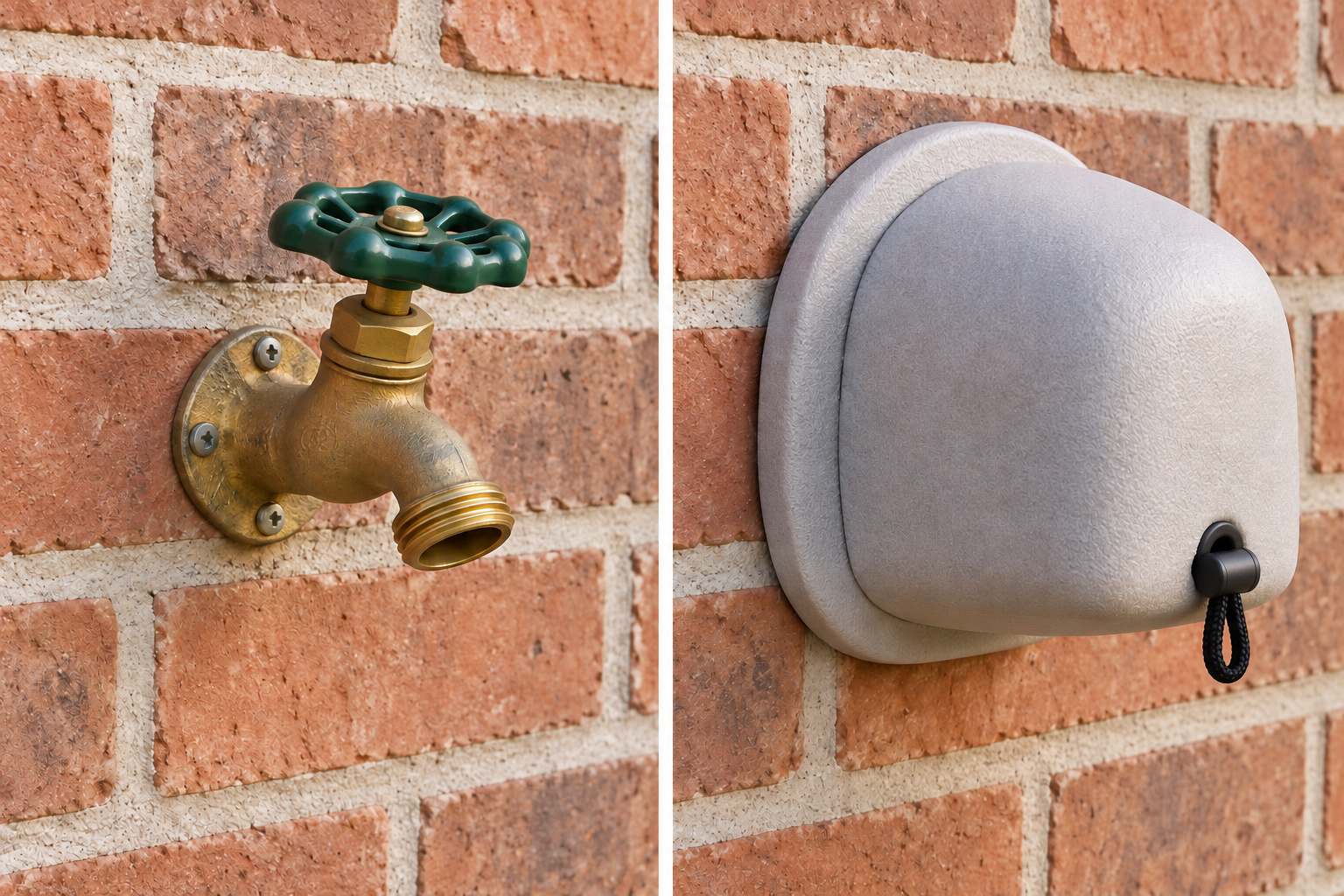
Walk around the whole house, including a side yard or detached workspace you rarely use. Make a list of every exterior water connection. Mississippi State University Extension recommends draining and storing disconnected hoses, insulating vulnerable pipes in unheated areas, and using insulated covers on outdoor faucets. Read the Extension checklist and follow the instructions for your particular fixtures; a cover is not a guarantee against every freeze.
For a new homeowner, the valuable question is often not “Which cover should I buy?” but “What is behind this faucet?” Ask a plumber about exposed runs, any interior shutoff, and the preparation appropriate to your installation. Do not assume a fixture’s appearance tells you how it drains.
Treat an irrigation system or swimming pool as a separate equipment question. Ask the installer or service company for a written cold-weather plan for that specific system, including what to do if power is lost. Keep the plan with the equipment manual so another responsible adult can find it.
Make the heating and weather-sealing checks before you need them
Alabama Cooperative Extension recommends annual cleaning and inspection of heating equipment and chimneys. Its winter-storm preparation guide makes this a routine maintenance item rather than an emergency project. Find the last service record, arrange any overdue visit, and ask which filter and maintenance schedule your system requires.
Mississippi State University Extension recommends weather stripping at drafty doors and windows. Start by identifying the gaps you can safely inspect, then choose the appropriate repair. Do not seal a combustion-air opening or equipment vent simply because it feels cold; ask the service technician when you are unsure what an opening does.
The National Weather Service includes gutter cleaning, pipe insulation, and testing smoke and carbon-monoxide alarms in its home winterization checklist. See the NWS winter-at-home guidance. Put these on the same calendar as the heating visit. Arrange professional help for high gutters or roof concerns instead of turning a seasonal checklist into a ladder project.
Keep the work practical: record what was checked, when, and what still needs attention. Buyers can use that information to understand a home’s care history. Sellers can keep receipts together without turning a maintenance record into a promise that a system will never fail.
Use a three-stage plan instead of a last-minute scramble
Before cold weather: finish the service appointments, identify water connections, gather supplies and write down the person who can help if you are away. When freezing conditions are forecast: read current guidance for your address and utility, review the equipment-specific plan, and make sure household members know what is changing that night. Afterward: check accessible areas for leaks or other concerns and contact the relevant professional if something looks wrong.
For cold-weather pipe protection, Alabama Extension recommends opening sink cabinets so warmer air can circulate, while moving cleaners out of children’s reach. It also recommends keeping garage doors closed where water lines are present. These are targeted precautions, not a reason to leave chemicals accessible or to assume every pipe in the house is protected.
Keep the current forecast separate from this evergreen checklist. NWS notes that winter-storm impacts can vary over short distances. Check the forecast for the property where you will actually be, especially if your work, current home and new home are in different communities. Do not use an old storm article or a screenshot without a date as tonight’s instructions.
Plan for a power interruption without improvising heat
An outage plan can be simple: working flashlights, charged communication devices, drinking water, food you can use without your normal cooking routine, and a contact who knows if you need help. Think through medication, medical-equipment and pet needs with the appropriate provider before bad weather arrives. Put the supplies where you can reach them in the dark, not behind the last row of moving boxes.
Never run a portable generator inside a house, garage or partially enclosed space. NWS says to operate portable generators outdoors at least 20 feet from doors, windows and garages, following the equipment instructions. Do not improvise a connection to household wiring; arrange that work with a qualified electrician. The NWS outage guidance explains the carbon-monoxide concern and other winter-at-home precautions.
If your household depends on equipment that needs electricity, make a specific backup plan with the provider. A generic emergency kit is not a replacement for that conversation. Likewise, decide ahead of time where you could go if the house cannot stay adequately heated; trying to solve that during an outage adds another decision at the wrong moment.
Moving or selling? Write down who is watching the house
A home between occupants needs more than “someone will probably stop by.” Agree on who monitors the forecast, who can enter the property, who contacts a contractor, and how the parties will communicate if a problem is found. Keep that arrangement consistent with your contract and access permissions. A buyer’s interest in a house does not itself authorize entry or repairs before possession.
Alabama Extension recommends leaving the heat on at no less than 55°F when away during cold weather. Treat that as general guidance to discuss alongside your home’s plumbing, equipment instructions and insurer’s requirements, rather than a guarantee that every pipe will remain protected.
The Alabama Department of Insurance cautions that vacant-home policies may require minimum heat or a water shutoff. Ask your own insurer what your policy requires when a home is empty, and get clarification before disconnecting services. Coverage depends on the policy and circumstances; do not assume a neighbor’s insurance experience applies to you.
For a relocation handoff, ask for a small packet: equipment manuals, service receipts, utility contacts and a clear explanation of existing winter settings. If the seller has winterized a system, ask what was done and what must happen before normal use resumes. Those questions are worth raising early enough for the seller, inspector or service professional to answer them carefully.
A useful afternoon checklist
Choose five concrete tasks: locate the home-system records; check every outdoor water connection; book any overdue heating service; test the alarms according to their instructions; and write down the household’s absence or outage plan. Give each unfinished item an owner and a date. If a task needs a professional, booking the visit is a useful result for today.
Sources checked October 24, 2026: Alabama Cooperative Extension’s Winter Storms guide (November 28, 2018); Alabama Department of Insurance’s winter-weather guidance (January 23, 2026); and the NWS and Mississippi State University Extension resources linked above. Historical storm timing in those sources is not a current forecast.
Featured image: AI-generated conceptual illustration, not a photograph of a specific property or workplace.
Final Thoughts: A little preparation makes the next step clearer
Knowing how your home handles cold weather helps you make better decisions long before a forecast becomes urgent. Keep the service records, water shutoff information and unfinished tasks together so they are useful whether you are staying put, preparing to sell or learning a newly purchased home.
Want Personalized Real Estate Help?
Buying, selling or relocating in Northern Alabama? I can help you connect your moving timeline and property priorities to the next steps in your home search or sale. Contact me to talk through your next step.
Sharing is Caring:
Author