Jessica Hassan
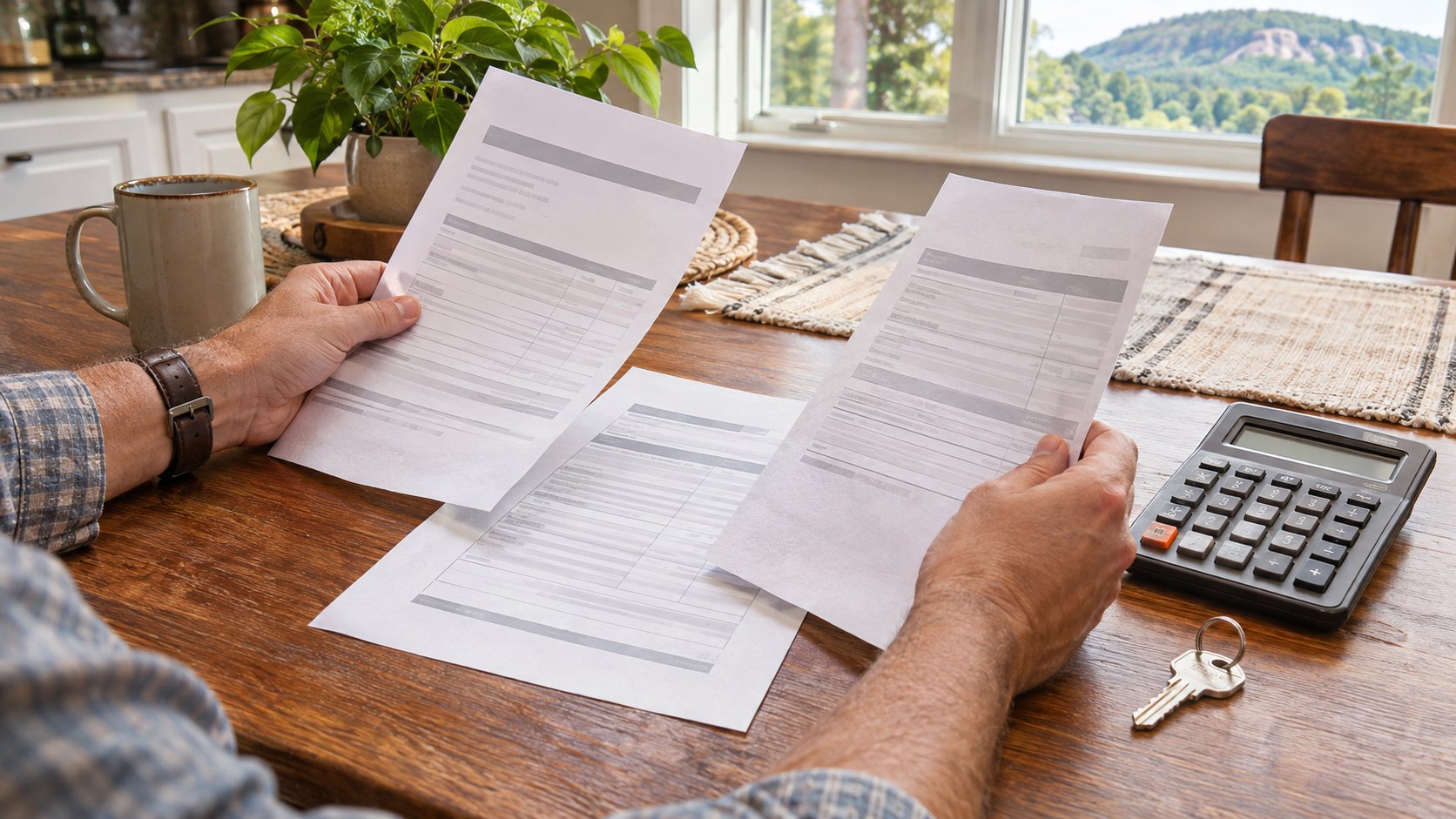
A higher mortgage bill can look like a single unpleasant number. If your Northern Alabama home’s payment changed after an annual escrow analysis, split that number before deciding what happened. One part may fund the taxes and insurance the servicer expects to pay next year. Another may repay a shortfall in the account from the year just ended. Those are different questions, even when they arrive on the same notice.
Featured image disclosure: This AI-generated photograph shows generic paperwork at a home table. It is not a real homeowner’s statement, county tax bill, or insurance record.
The Consumer Financial Protection Bureau (CFPB) explains that property-tax and homeowners-insurance changes can change the escrow portion of a mortgage payment. Other causes are possible, including an adjustable interest rate, mortgage insurance, fees or a servicing error. Start with your itemized mortgage statement: confirm that it is the escrow line that moved before using the steps below.
Read the statement in two time directions
An annual escrow statement should show the account’s past-year activity and a projection for the next escrow year. The CFPB’s mortgage-servicing FAQ says it includes past and current monthly escrow portions, total deposits and payments, the ending balance, and an explanation of any shortage, deficiency or surplus. That layout lets you ask two separate questions: What does the servicer expect the next bills to cost? and What happened to the account while it paid the last bills?
For the forward-looking question, locate the projected tax and insurance disbursements and their dates. Compare those figures with the actual county tax notice and current insurance renewal, recognizing that an estimate may use the best information the servicer has. The county tax authority determines the tax bill; the insurer determines the premium. The servicer calculates deposits to cover the bills it expects to pay. If a bill has changed, identifying which bill changed gives you a more precise first call than asking why ‘the mortgage’ rose.
In Alabama, the useful tax comparison comes from the county where the property sits. The Alabama Department of Revenue says parcel and tax-account questions belong with that county’s tax office, and its county-office directory leads to local appraisal and assessment records. Match the parcel, tax year and amount on your county record or bill to the servicer’s projected tax payment. If you recently bought the home, do not substitute the seller’s old listing tax figure: the state’s buyer guidance says an ownership change triggers reassessment and the taxable assessed value resets for the subsequent tax year. That does not tell you what your new bill will be; the county record and your own exemption/classification status must answer that question.
For the backward-looking question, compare last year’s projected payments with what the escrow account actually disbursed. A shortage means the account balance falls below the target balance at the analysis, according to the CFPB’s escrow definitions. It is not automatically an unpaid tax bill or a late mortgage payment. The statement’s balance and shortage explanation show whether a catch-up amount is being added to the monthly collection.
A $100 increase can contain two different $50 changes
Consider a simplified hypothetical, with principal, interest and other charges unchanged. Last year’s expected property taxes and insurance totaled $2,400, so the illustrative monthly amount for those bills was $200. The next year’s expected bills total $3,000, or $250 per month. That is a $50 monthly increase for future bills.
Now suppose the annual analysis also finds a $600 shortage and the servicer requires equal repayment over 12 months. That adds another $50 per month for the past gap. In this simplified example, the escrow-related payment rises from $200 to $300: $250 for anticipated bills plus $50 to repay the shortage. The $600 repayment is not a second estimate of next year’s taxes or insurance.
The numbers illustrate the separation, not a promise that your servicer will calculate your account this way. A permitted escrow cushion, timing of disbursements and the account’s target balance can affect the actual analysis. The CFPB’s shortage guidance says a servicer may require a shortage at least as large as one monthly escrow payment to be repaid in equal installments over at least 12 months; it may also allow the shortage to remain. Read the option actually shown on your statement before choosing a response. Do not treat an unexplained lump-sum demand as the default for this example.
Use the discrepancy to choose the right next contact
- Projected tax seems wrong: compare the parcel and current tax amount on the county notice with the amount and payment date used in the escrow projection. Ask the county tax office about the bill itself and the servicer about the figure in its projection. If you are checking why your assessment changed, our North Alabama homestead guide explains why a seller’s old bill may not describe a new owner’s classification or exemption.
- Insurance estimate seems wrong: use the renewal or declarations page to confirm premium, coverage period and payment recipient with the insurer, then ask the servicer to reconcile its projected disbursement. A premium change does not by itself establish a change in the loan’s interest rate.
- Past disbursement or shortage seems wrong: match each tax and insurance payment in the account history to the corresponding bill and date. Keep the old projection, current analysis and monthly statements together so you can name the line that does not reconcile.
The CFPB advises monitoring mortgage statements, tax bills and insurance bills for escrow problems. If a tax authority says the bill was not paid, contact the servicer and tax authority promptly; that is more urgent than a mere estimate disagreement. For an unexplained payment change or suspected servicing mistake, call the servicer, record the date, representative and reference number, and request a corrected explanation. If the issue is not resolved, the CFPB describes a written notice of error or information request sent to the servicer’s designated address, which may differ from the payment address.
Conclusion: explain the new payment line by line
A useful escrow review ends with a small reconciliation: old monthly escrow, new amount for expected bills, any monthly shortage repayment, and any other changed mortgage charge. Then match the projected bills to the county and insurer records and the past disbursements to the account history. You may still need the servicer to explain its target balance, but you can ask about a specific difference instead of a single unexplained total.
Want Personalized Real Estate Help?
If property taxes and carrying costs are part of a Northern Alabama buying or selling decision, I can help you organize the property questions to raise with the county, insurer and lender or servicer. Contact me to discuss how those records fit your real estate plan.
Sharing is Caring:
Author

Sources and review notes
Sources checked November 23, 2026: CFPB guidance on payment changes, annual escrow statements, shortages and escrow-account problems, linked above. This is general information; your servicer’s statement and the actual tax and insurance bills control the facts of your account. The featured image is AI-generated generic context, not a genuine financial document.