Jessica Hassan
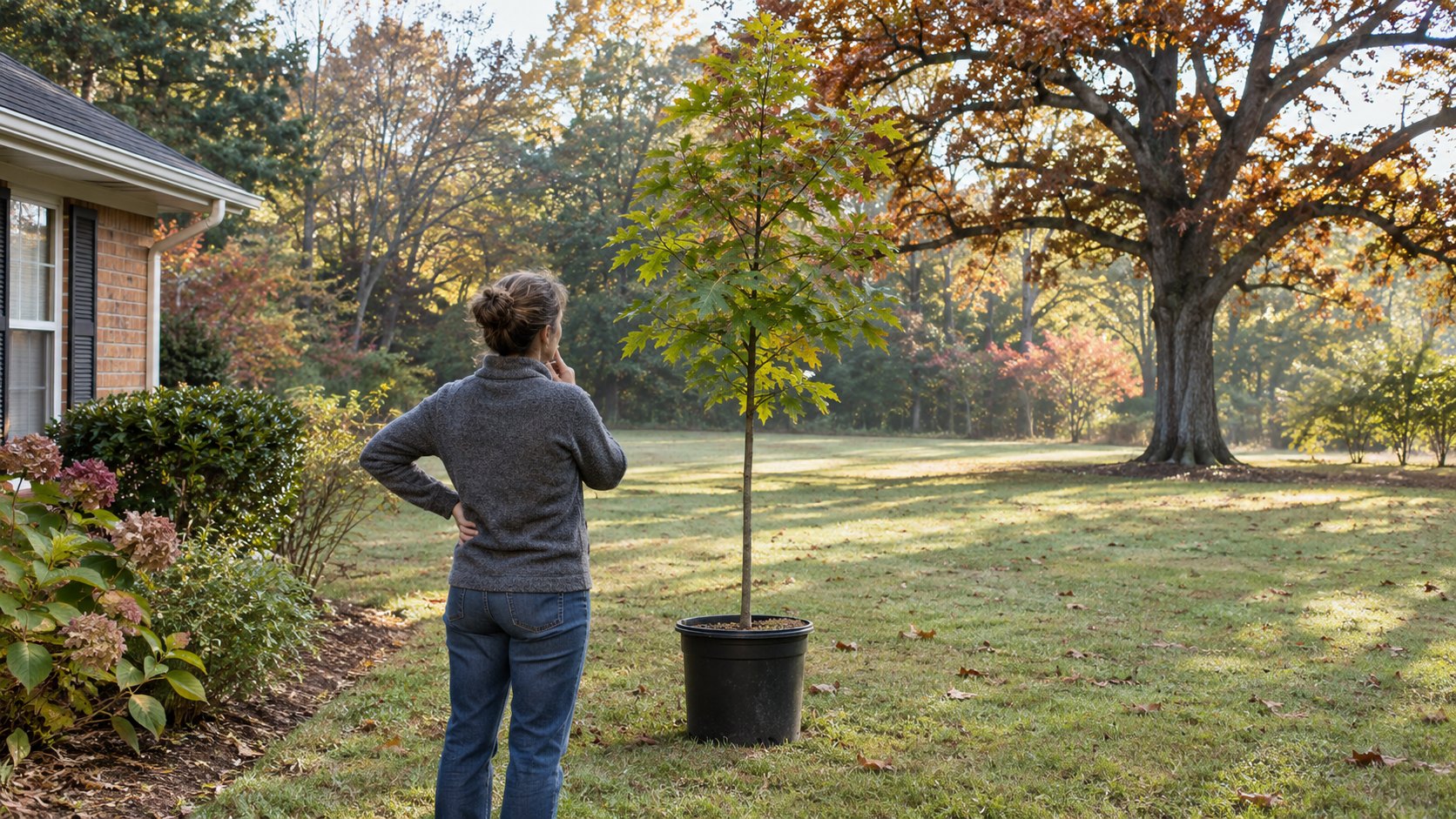
A shade tree is easy to choose by how it looks at the nursery. The harder decision is whether its mature canopy and roots will fit your actual yard, and whether you can keep the root ball moist through its first North Alabama summer. Walk the site before you buy. Then use planting depth, not a bag of fertilizer, as the day-of-planting priority.
The Alabama Cooperative Extension tree-selection guide asks homeowners to match a tree to the site’s light, soil, drainage and mature space. Its tree-planting guide explains why a shallow, wide hole, visible root flare and thoughtful watering matter. The steps below turn that guidance into a yard decision rather than a promise that any one species will work everywhere.
First, walk the yard as a mature tree would occupy it
Stand where you want the trunk and look up, out and down. Which direction would the crown spread? Is there room for the species’ mature height and width without pressing into a roof, overhead line or neighboring planting? Where will leaves, roots and shade fall relative to a patio, garden, driveway and sidewalk? Match the plant label’s mature dimensions and light needs to what exists on site; do not assume a small nursery tree will stay small. Alabama Extension’s site-analysis guide specifically cautions against a large-growing tree directly beneath a utility line.
Then look at drainage. A low patch that holds water after rain asks a different question from a dry, exposed lawn. Alabama Extension recommends matching the species to its actual moisture and soil conditions and using a soil test where pH or fertility affects the choice. A soil test is information for selection and any indicated adjustment; it is not a reason to make one isolated planting hole of rich compost in otherwise different native soil. Extension warns that sharply contrasting backfill can hold too much or too little water around the new root ball.
- Space: Ask the nursery for credible mature height and crown width, then check the space above and beside the planned trunk.
- Soil: Observe where water stands or drains after rain; choose a tree that tolerates those conditions rather than assuming a planting hole will fix them.
- Digging: Before disturbing the ground, follow the separate Alabama 811 and private-line checklist. A utility locate does not choose a safe mature-tree location for you.
At the nursery, inspect the roots as well as the crown
A tree with a full canopy is not automatically the better purchase. Ask to see how the trunk widens at the base—the root flare—and whether roots are circling inside a container. Alabama Extension explains that circling roots should be loosened or corrected before planting; otherwise they may constrict later growth. Also compare stock size with your ability to move and water it. Extension’s selection and care guidance notes that smaller nursery stock can be easier to establish than a large specimen. A nursery professional or county Extension office can help match species and stock type to a wet, dry, sunny or constrained site.
Planting day: keep the root flare at grade
Find the actual root flare before measuring the hole. Soil or potting mix may cover it inside the container, so the top of the container is not always the correct depth reference. Dig no deeper than the root ball measured from its flare, and make the hole roughly two to three times the ball’s width. Set the flare just above the surrounding finished grade; keep the tree upright while backfilling with the excavated soil. The 2026 Extension planting publication gives these dimensions and recommends loosening the hole sides so roots can move outward. Do not bury the flare under extra backfill after watering settles the soil.
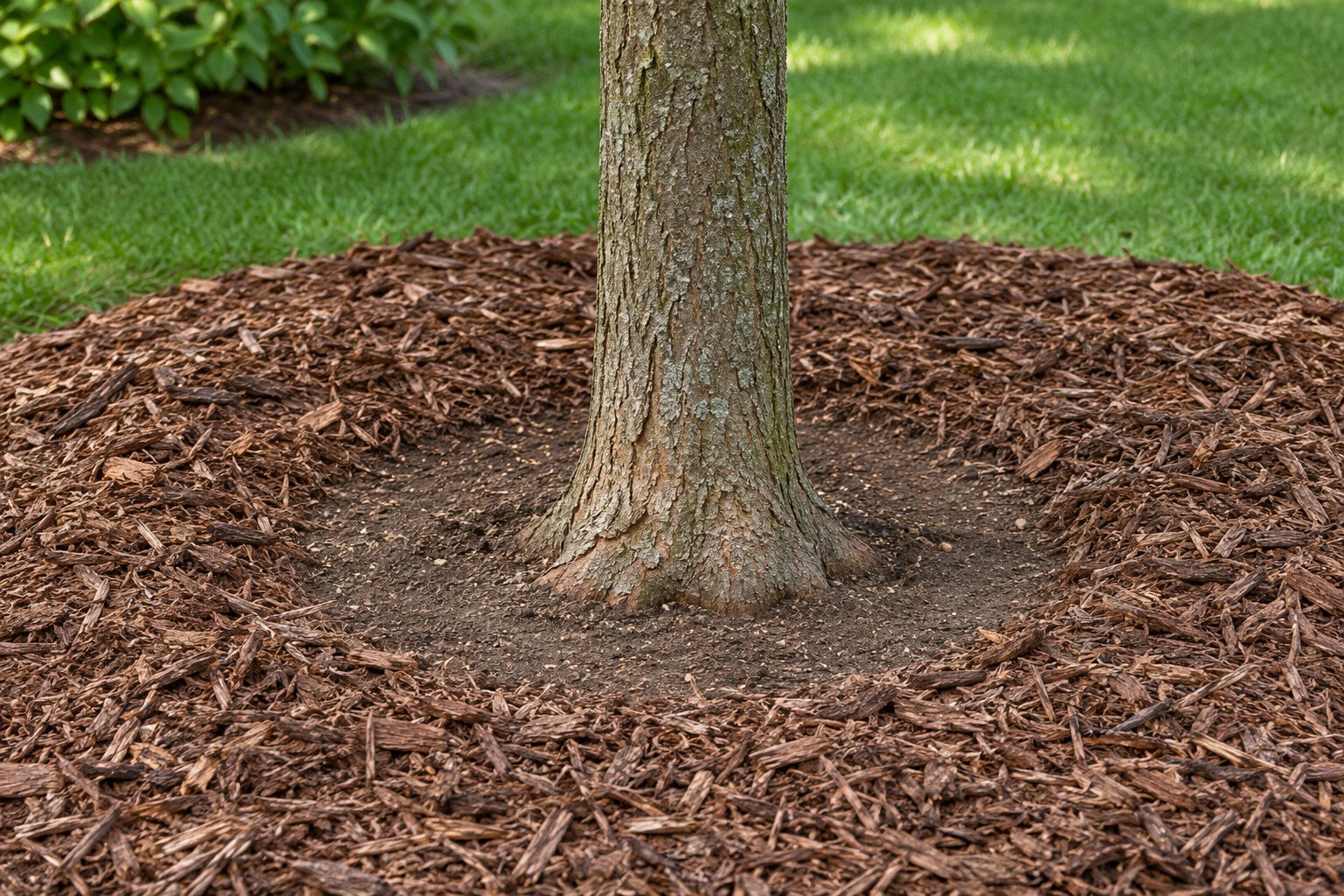
Container roots that circle the ball need attention before it goes into the hole. For balled-and-burlapped stock, remove wire, rope and synthetic wrapping and peel back natural burlap at the top and sides as Extension directs. These stock types require different handling; ask for help if the ball cannot be safely kept intact while moving it. Water the root ball and backfill thoroughly at planting to settle soil, then add a broad, level mulch ring. Extension recommends about 2–4 inches of organic mulch with at least 2–3 inches of clear space around the trunk—not a mound touching bark.
First year: check the soil before deciding to water
Put a reminder on your calendar for the first growing season, especially when rain becomes irregular. The new tree’s root ball can dry while nearby lawn soil still looks moist. Check moisture in and beside the root ball by hand or with a probe before adding water, then apply it slowly enough to soak in rather than run off. As a starting schedule, Alabama Extension says to water daily for the first two weeks after planting, every two or three days for roughly the next three months, then weekly until established. It also advises moistening soil about 8 to 12 inches deep. Treat those intervals as a check-in plan, not an automatic watering command: rain, soil texture and the root ball’s actual moisture decide whether water is needed. Sandy ground dries sooner; clay holds water longer.
If the soil remains wet or water sits in the planting hole, more irrigation may deprive roots of air. If the root ball is dry below the surface, a light sprinkle on the mulch is not a substitute for a thorough watering. The Extension guide describes establishment as a process that often spans two or three years, so continue checking in dry spells after the first summer rather than treating one season as a finish line. A slow-release bag or other measured delivery method can help you see what you applied, but the soil check decides when.
Stake only if the new tree will not stand securely or the site is unusually exposed. Use flexible, low ties that permit some movement and remove support when it stands on its own. Do not leave ties to tighten against bark. Unless a soil test or a specific tree problem says otherwise, do not make fertilizer or heavy pruning the default first-year response; Alabama Extension’s care guidance prioritizes water, mulch and proper planting.
Conclusion: choose the site before the tree
The useful sequence is site, species, stock, planting depth and moisture plan. A tree that fits the future space but is planted with its flare buried still starts with a preventable problem. A well-planted tree without first-year water attention faces another. Take notes on light and drainage, ask a nursery or Extension specialist about a candidate species, and plan a soil-aware check-in before you bring it home.
Want Personalized Real Estate Help?
If you are comparing homes across Northern Alabama, outdoor space is part of how a property will work for you. I can help you weigh yard, location and home-search tradeoffs as you decide what to tour. Contact me to talk through your priorities; a nursery or Alabama Extension professional can advise on the tree and planting site itself.
Sharing is Caring:
Author

Sources and review notes
Featured image: AI-generated generic residential yard. It is not a photograph of a named property or a specific North Alabama planting site.
Sources checked November 26, 2026: Alabama Cooperative Extension’s tree selection, site analysis and planting guidance, linked in the article. These are general practices for a regional yard; the right species, utility clearance, soil correction and watering frequency depend on the actual property.