Jessica Hassan
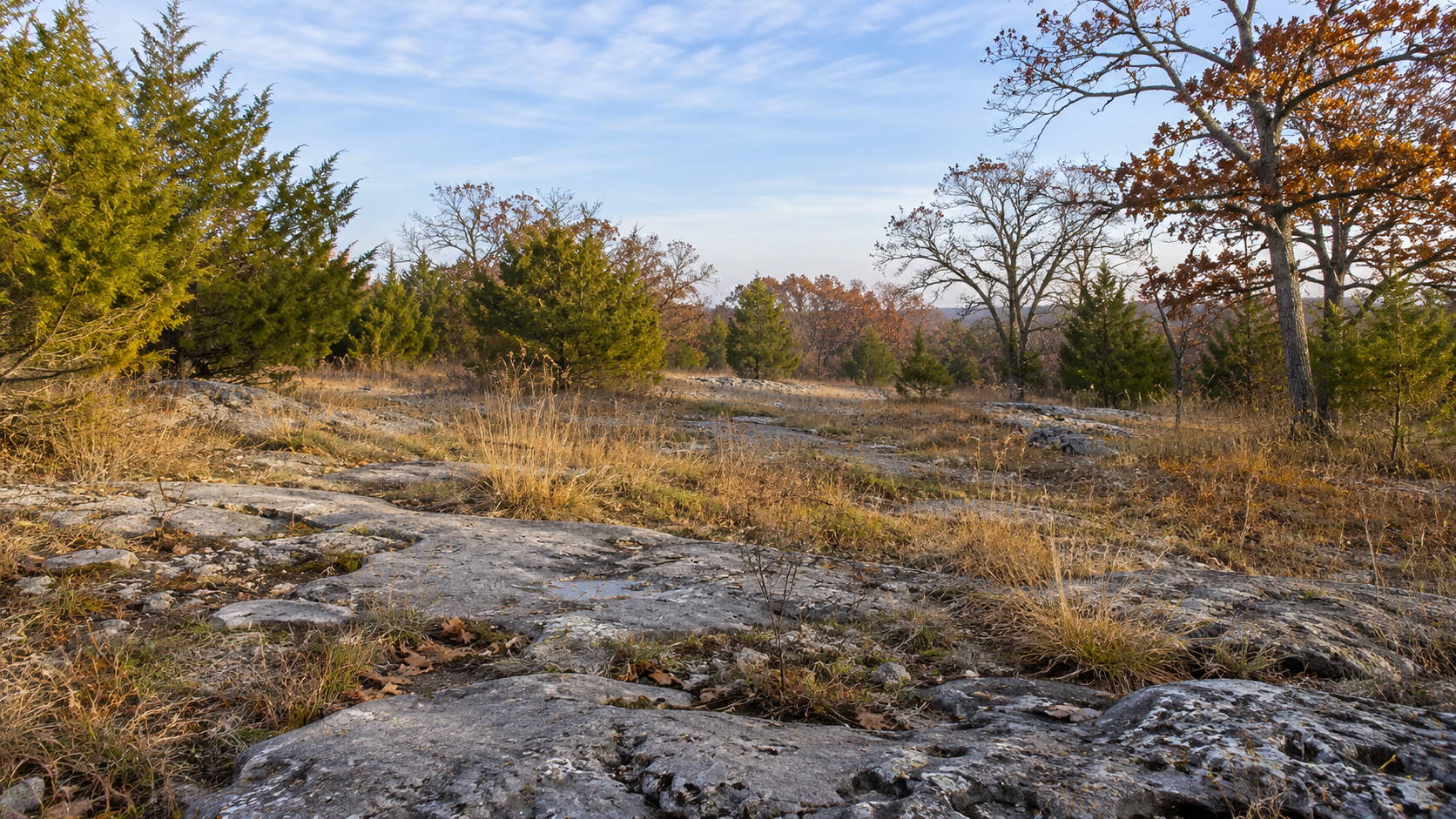
Prairie Grove Glades rewards a different kind of outing from a wooded trail. At the Lawrence County preserve, low limestone rock and shallow soil interrupt the tree cover. The Nature Conservancy describes spring wildflowers as a highlight, but a late-November visit can instead be a chance to understand the ground that makes those flowers possible. Plan for a careful daylight look along the preserve’s stated route, not a promised loop or a guaranteed bloom.
The Conservancy identifies this 191-acre site as Alabama’s largest intact cedar-glade complex of its type. That distinction is about habitat, not visitor infrastructure. Its public guide says people may enter during daylight hours, park at the entrance gate and follow the old roadbed behind the sign into the glades. It also asks visitors to stay on paths and watch for fragile plants. Read the operator’s current visitor guide before driving out.
Choose the season for the question you want to answer
If your main aim is color or plant photography, spring is the season the Conservancy calls out. Its page describes wildflowers, watery seeps and species in slightly deeper soil at glade edges. It does not promise a peak week, a bloom on a particular day or an identifiable rare plant at the roadside. A return trip may teach you more than trying to make a November landscape look like a spring photograph.
For a late-fall visit, put the flowers aside and use three visual clues: exposed limestone, the thin soil collected in cracks or pockets, and small islands of cedar and hardwood. Those are physical features the operator describes, so they remain a meaningful focus after the spring bloom. The state wildlife agency’s glades-and-prairies chapter explains the broader pattern: Alabama limestone glades have exposed bedrock and thin soils, with strong sun and periodic drought stress. That chapter is a draft planning document, useful for habitat context rather than a current condition report for Prairie Grove. See the state habitat chapter.
| Visit aim | What the sources support | What to leave open |
|---|---|---|
| Late-fall landscape reading | Look from the path for flat rock, shallow-soil patches and cedar or hardwood islands. | No current foliage, surface condition or trail-length report. |
| Spring flower visit | The preserve operator highlights wildflowers and seasonally wet seeps in spring. | No bloom date or species sighting is guaranteed. |
| Long hike | The operator identifies an old roadbed into the glade complex. | No maintained loop, mileage or accessibility specification is published on the guide. |
Find the entrance from the operator’s directions
The clearest arrival instruction is the Conservancy’s own turn-by-turn route, not an assumed street address. From Moulton, its page sends drivers west on Alabama Highway 24 for about 13 miles, right onto County Road 43 for about 0.9 mile, then right at the fork for roughly 1.5 more miles to the parking area and preserve sign on the left. The guide describes the entrance gate and an old roadbed behind the sign. Read the full Prairie Grove directions and preparation notes before departure; the distances are approximate and the page does not publish a parking capacity or a street address.
That entry description shapes the visit. Start at the marked gate, use the old roadbed and existing paths, and choose a turnaround point that leaves daylight for the walk back. The owner has said it still needs funding for more visitor-friendly trails. I would not convert “hiking” on its highlights list into a claim that there is a signed, maintained loop. The public page also does not specify surface accessibility, restrooms, water or a current closure bulletin. If any of those determine whether your group can go, ask the Conservancy before making the drive; its visitor page gives a contact number.
Let the ground explain the conservation rule
The open rock is not empty space between “real” trail scenery. The Conservancy describes flat limestone outcrops with very shallow soils and vegetation islands. A little soil in a crack or beside a slab can support a plant that would be easy to miss from standing height. The close-up below is an AI-generated generic visual of that rock-and-soil relationship, not a photograph from Prairie Grove and not an identification guide.
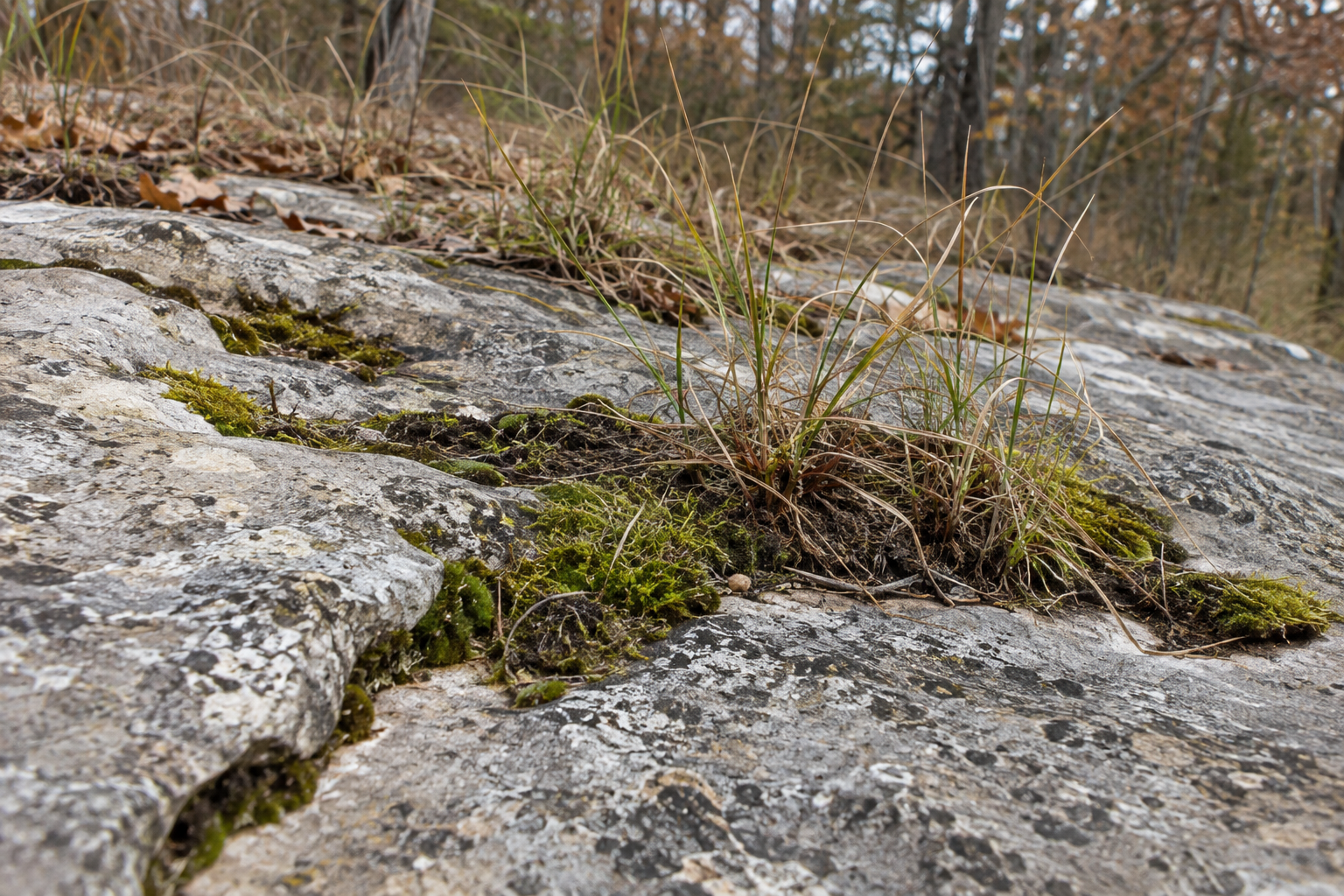
That small scale explains why the operator’s stay-on-path request matters. Its page says a fence was built to curb dumping and ATV ruts that damaged fragile plants. The state draft describes soil disturbance, woody encroachment and invasive species among broader glade pressures. The Conservancy lists prescribed burning among its restoration work at this preserve. Those facts support a modest visitor rule: keep feet and equipment on the established path, leave plants and rocks where they are, and let a seasonal change remain part of the habitat rather than a reason to step into it.
A name can also mislead: Prairie Grove Glades is the Lawrence County Nature Conservancy preserve. Alabama’s separate Prairie Glades Special Opportunity Area is in Montgomery County and has hunting access rules. Do not use information for that similarly named property to plan this walk. The preserve operator’s page is the authority for this visit.
Make a small, useful outing plan
A first visit works best as a short observation outing. Choose daylight, check the operator page again for access or stewardship notices, and bring the ordinary essentials that fit your group and weather. On the old roadbed, look first at the rock surface, then at soil pockets from the path, then at where trees interrupt the open glade. A photo from the path can help you compare a late-fall visit with a spring return without requiring you to identify or approach a rare plant.
If you are comparing Lawrence County places to spend your weekends, this gives you a specific routine to test: the drive from the community you are considering, the daylight window and whether a quiet habitat visit is what you actually enjoy. A separate Oakville memorial story looks at a different Lawrence County stop through local history. Neither outing by itself establishes a home’s commute, school assignment, access rights or property conditions.
Source note: The Nature Conservancy’s Prairie Grove visitor page and Alabama’s wildlife-action-plan habitat material were read November 26, 2026. The state chapter linked here is marked draft; it supplies general ecology, while the Conservancy supplies site-specific access. Access, route condition and seasonal appearance should be confirmed again before a real visit. Both images are original AI-generated generic context, not documentary photographs of the preserve.
Conclusion
Prairie Grove is worth visiting for the limestone-and-shallow-soil landscape even when spring flowers are not the point. Follow the Conservancy’s directions to the signed entrance, stay on the old roadbed and paths, and let the open rock, soil pockets and tree islands tell the story. Save a second visit for spring if blooms are your main goal; confirm current conditions with the operator before traveling.
Want Personalized Real Estate Help?
If this kind of Lawrence County weekend is part of where you hope to live, you can explore Moulton-area homes as a geographic starting point. The search is centered on Moulton and may include nearby areas; listings do not verify a home’s drive to the preserve or its site-specific conditions. I can help you compare the places and daily routines that matter to your move. Contact me to talk through your priorities.
Sharing is Caring:
Author