Jessica Hassan
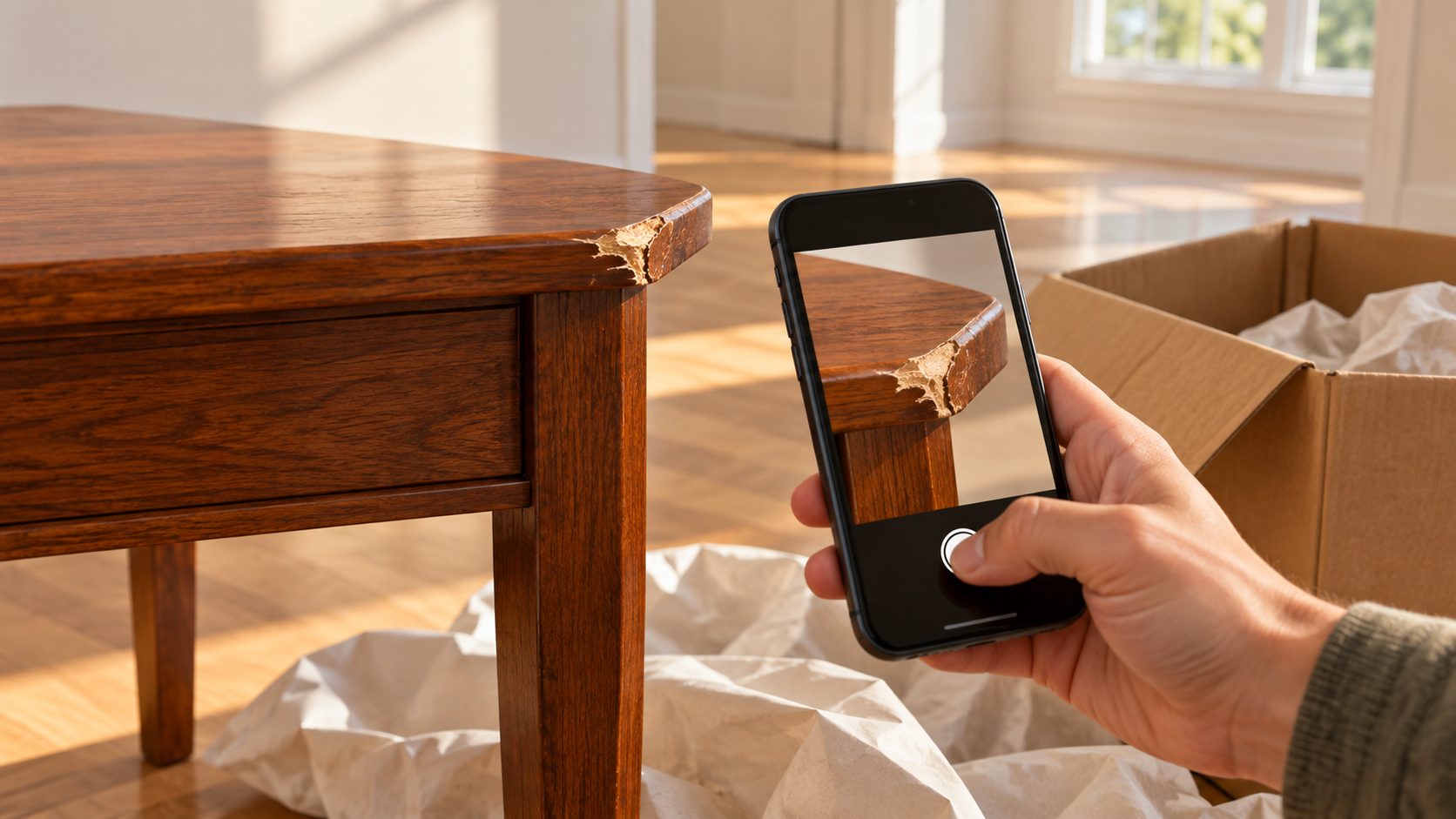
A chipped table corner is easy to spot while unpacking. The paperwork distinction is easier to miss: telling the mover what was damaged is not the same as asking for compensation. For a government-arranged household-goods move connected with Redstone, keep the loss-or-damage notice and the itemized claim as two separate tasks.
This guide concerns the military household-goods claims process, not every move into Huntsville or Madison. A contractor’s privately arranged move, an employer reimbursement and a government shipment can have different terms. Identify the shipment and responsible transportation office from your own moving records before using a deadline.
Which record tells the mover what happened?
The Navy’s personnel-claims guidance distinguishes shipments handled in the Defense Personal Property System (DPS) from those handled outside it. For a DPS shipment, the claim goes to the transportation service provider (TSP) through DPS. For a non-DPS shipment, use the TSP’s delivery instructions. Being stationed near Redstone does not, by itself, select the filing system or claims office.
Start a shipment folder with the pickup date, delivery date, inventory, delivery paperwork, TSP contact and any notice already submitted. Add the actual submission confirmation beside the document. A saved draft, an unsent email and a completed submission should not look interchangeable in your records.
Notice and claim: two different checkpoints
The Navy’s updated DPS claim instructions explicitly say that a loss-or-damage notice does not file a claim. The claim identifies individual items, describes the damage and states an amount requested. Keep that distinction visible while you unpack.
| Checkpoint | What it accomplishes | What to retain |
|---|---|---|
| Loss-or-damage notice | Reports missing or damaged belongings to the TSP. | The notice, item identifiers and proof it was sent. |
| Itemized monetary claim | Requests compensation for the listed items. | The submitted claim, requested amounts and supporting records. |
| Claim follow-up | Tracks the response and any unresolved items. | Offers, correspondence and the next action for each item. |
For example, suppose inventory item 42 is your side table. A useful record identifies that table and the chipped corner; the claim then adds the amount requested and supporting information. “Furniture damaged” is much harder to connect to a particular object, photograph and later response. This example is an organizing method, not an estimate of what a carrier owes.
Why you may see both nine and twelve months
For the current household-goods process, notice is generally due within 180 calendar days after delivery. The full-replacement-value claim window depends on pickup: before May 15, 2026, it is nine months after delivery; on or after that date, it is twelve months after delivery. Military OneSource’s updated claim instructions state that distinction. Pickup selects the rule; delivery starts the claim clock.
As checked November 1, 2026, that same webpage still had an older nine-month heading and summary. The updated body and the Navy’s 2026 packet distinguish the two pickup periods. Do not treat a search snippet or an older saved checklist as a complete deadline guide. Older shipments and storage arrangements need their own applicable instructions, and timely filing does not guarantee the amount you request.
Put the actual pickup and delivery dates at the top of your folder, then record the applicable notice and claim deadlines separately. Do not plan around the last day. The Army claims page also identifies a two-year limit for a claim against the United States; that is not permission to ignore an earlier carrier deadline. Ask the responsible military claims office about a late, disputed or unusual shipment.
Build an item record you can follow later
Photograph the whole object so it is recognizable, then the damaged detail. Keep those images with the inventory number, a plain description, purchase information you have and relevant correspondence. Preserve original photos; an edited collage should not be your only record. Avoid including orders, identity documents or account details in photographs you share unnecessarily.
The Navy’s non-DPS instructions caution against discarding damaged items before settlement and the applicable inspection period, and explain that the TSP may have salvage rights. Ask for instructions before disposing of an item. They also warn against delaying a claim while gathering additional information and against assuming an independently purchased repair estimate will be reimbursed.
Make one short follow-up list: item, last response, next action and date. That is easier to use than searching an entire email thread each time the mover asks about one piece. If someone else is helping, agree who will submit and who will keep the record; two people should not unknowingly maintain competing versions.
Separate damaged belongings from damage to the home
A broken dresser and a gouged floor are different claim questions. Military OneSource’s residential-damage section directs customers to document damage when it happens and contact the TSP within seven calendar days of its last visit to the residence. Do not assume the household-goods notice window covers the building too. Keep the mover record separate from any landlord move-in report.
If the truck has not arrived yet, the more useful next step is the first-week housing and furniture-arrival plan. It covers possession, an arrival kit and the gap before delivery. If you need someone else to handle legal paperwork, the Redstone legal-assistance guide explains why eligibility and the type of assistance matter. Neither a realtor nor a home listing determines a claim’s eligibility or payment.
Conclusion: close the paperwork loop as you unpack
Keep three things together: the shipment dates, an identifiable record for each damaged item and proof of the action actually submitted. Notice preserves one part of the process; the monetary claim does another. A clear folder and separate reminders let you return your attention to settling into the home without relying on memory or an outdated deadline summary.
Want Personalized Real Estate Help?
If your Redstone-area move is still taking shape, I can help you work through the housing side: buying, selling and possession timing. Contact me to talk about your plans, while your transportation provider and claims office handle shipment decisions.
Explore homes in the broader Huntsville and Madison area around Redstone as a geographic starting point. This search does not establish on-installation housing, a commute, moving-benefit eligibility or claim coverage.
Sharing is Caring:
Author